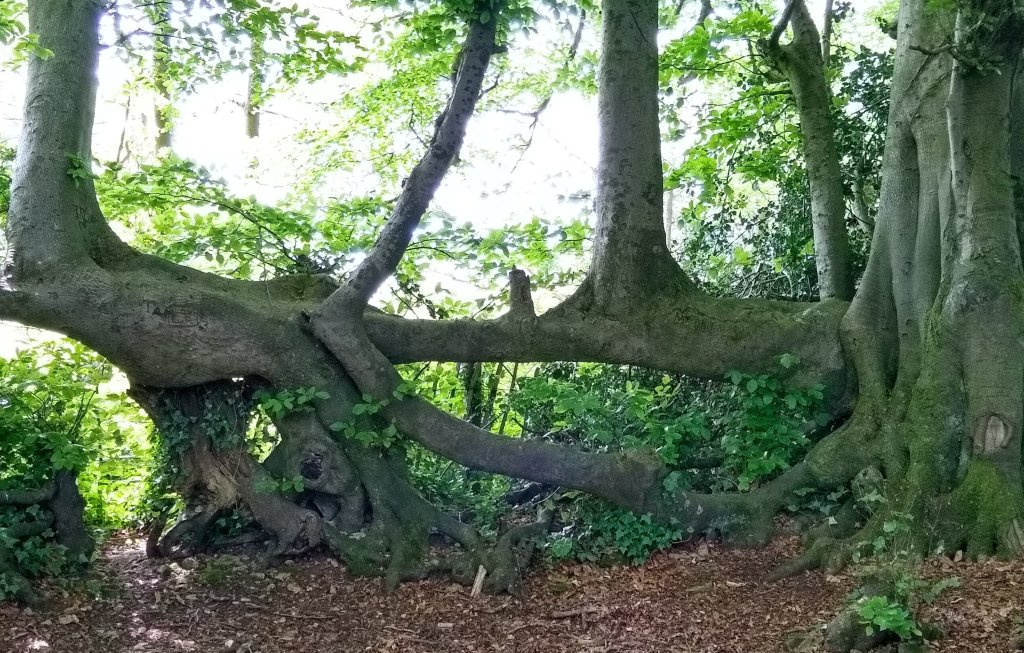
Before I started writing this blog post I took a walk in a nature park that is close to my home. I had spent the morning trying to upload my film to a website in order to submit it to some festivals (more news on that to come), and was in need of a creative reset before I started working on a different project. I frequently find that a walk in a wild place will help me think through what I want to say or do next on any number of my creative works in progress, and it has significant positive impact on my mental and physical health too. I’m not the only one who finds this, and the positive impact of being in green or blue spaces on humans has been established for some time.
This is why I wanted to discuss some of the ideas of Rachel and Stephen Kaplan in this next ‘ideas from science to boost your art’ post. I came across their book, The experience of nature: a Psychological perspective while working up a proposal for a project at work. It’s an old book, published in 1989 and doesn’t appear to be in print any more, but I was able to access it for free here.
The book outlines a theoretical perspective on how natural environments are beneficial to us, and then brings together a lot of evidence to support different parts of the theory from psychological studies that the authors and their students conducted around that time. I really liked how they described an inclusive understanding of natural environments on page 2 as “places near and far, common and unusual, managed and unkempt, big, small and in-between, where plants grow by design, or even despite it.”
I’m not actually going to write about the evidence here. This is partly because the evidence is likely to have been built upon in the thirty years since it’s publication, and should I try to update that here this would turn into a very long blog post. It’s also partly because I think the basic ideas are something that may be helpful and thought provoking to creatives and non creatives alike. Given the book is 368 pages it’s unlikely that I’ll fit everything into a thousand words or so of a blog post, and I have also simplified things because of this. If you like what you see, try giving it a read.
Humans and information
They begin by describing how human beings are highly dependent on information to function, which they hoover up from their environments through all the senses available to them. The brain is in a constant state of sorting through which information is important and requires some sort of action, and which is not. In order to do this hoovering and sorting the brain can engage in two different types of attentional processes:
- ‘Involuntary attention’ – the kind of focus you may have when engaging with something you already find interesting. This kind of attention is relatively low effort, and enjoyable
- ‘Directed attention’ – the kind of attention you have to work at. If we think about this as writers, it’s the kind of attention you may need to sustain your concentration through a difficult scene or a series of picky revisions or edits. Sustaining this kind of attention for extended periods of time can result in mental fatigue, even if this has been in the pursuit of a project that is enjoyable.
They then make the argument, which feels intuitively right to me, that in modern society we have constructed urban environments and social structures that constantly provide us with lots of interesting and distracting information, and thus there is lots of ‘sorting’ to do between the information that is just interesting, and the information that requires action. As a result we frequently engage in directed attention, which can result in mental fatigue.
Mental fatigue
For most writers and creatives, especially ones like myself who are trying to fit creative stuff in around other bits of life, I think that mental fatigue may be a familiar feeling. It is the state where someone may feel ‘worn out’ without necessarily having engaged in any physical activity. They even note that people who experience this may complain that they have not engaged in enough activity.
The consequences of mental fatigue may be familiar too. People who are mentally fatigued are more likely to commit human errors and to be aggressive, less tolerant, and less sensitive to socially important cues. So here is the explanation for that gaping plot hole that you didn’t notice first time round in that bit of the book you wrote while really tired and highly caffeinated.
Restorative environments
The bulk of the book is dedicated to building a case around why natural environments may be ‘restorative environments’, by which they mean environments that facilitate rest and recovery from mental fatigue. They cite four different characteristics that environments they consider to be ‘restorative’ have:
- The sense of ‘being away’ both from one’s every day concerns and responsibilities, and from noise and cluttered urban spaces
- The sense of being in ‘a whole other world’ in which things may look and feel quite different
- They are inherently fascinating, and easily engage those processes of ‘involuntary attention’ we met earlier
- They are compatible with the things that people like to do
The descriptions of these four types of characteristics are quite long and detailed. I’m not going to paraphrase them here as this blog will never end, and I feel like these characteristics will intuitively make sense to a lot of people. If you do want to read about the detail, the relevant sections start from page 184.
I think many of us can see how being in a natural space may fit the bill for all of the above. Being out in a green or blue space means we are away from our desks, our work places, perhaps even our caring responsibilities, and things feel quite different there. Allowing ourselves the time to pay attention to the plants and insect and other animals can feel like being in a whole other world, and is, for many people, inherently fascinating. Being in calm green places allows many of us to do things that we enjoy, like hiking, cycling or sitting near bodies of water.
Recovery from mental fatigue
The final aspect of this theory that I think is really helpful for creatives is their discussion of how being in a natural environment can help us recover from mental fatigue. They suggest this can happen at four levels:
- Clearing the head and allowing your mind to pack away the ‘cognitive leftovers’ from a recent task or project
- Recovering our abilities to engage in the processes of directed attention, i.e. our ability to concentrate
- The ‘soft fascination’ that is induced by exploring the plants and creatures of a place allows for a kind of cognitive quiet which may give space to think about things that are ignored, or not felt to be important on a day to day level
- The space for deeper reflections on one’s life , priorities, actions and goals
For me I think the most important take away from these ideas is that as a creative, the key to being productive and having good ideas is not to work on this or that project in every spare moment as western culture may sometimes suggest. Rather, those moments when we step away from our desks and out, into the garden, or away to the park are really important for our brains to be able to function when we do next sit down to work on something. Personally I found this insight really helpful as I often feel a bit guilty when I take an hour out of my ‘art day’ to walk in the park, and perhapse I don’t need to feel like that at all.
I hope you have found this blog interesting or thought provoking. If you have thoughts or comments, I would love to hear from you.
Thank you for reading. I also write, make art and films. You can read my short fantasy stories here on Simily. If you are interested in the process of creativity and want to get a copy of my free short book of creative prompts, and to hear more about my writing projects please join my mailing list here. You can see my films at my YouTube channel here. You can see things with my designs on at my shop here. Could even treat yourself if you wanted to. Just saying. If buying art is not your thing, but you would like to support what you see I also have a Patreon page here.
Like my work but none of the above options appeal? You could consider a one off donation instead. I would really appreciate it.
Make a monthly donation
Make a yearly donation
Choose an amount
Or enter a custom amount
Your contribution is appreciated.
Your contribution is appreciated.
Your contribution is appreciated.
DonateDonate monthlyDonate yearly


 The Magpie at Midnight