Pleasure in working my craft

IMG_1095

I’ve been blogging over the last week or two about how making has been helpful to me when it comes to mental health and managing anxiety. When I first began to contemplate this subject on this blog I drew the link between mindfulness and making, and wrote about how I manage to reach my most mindful state when, well making. I’ve been thinking a bit more about this and while I think in principle this definitely holds, there are ways in which my arts practice diverges significantly from the practice of mindfulness.

In a course I recently completed on mindfulness we were taught to experience things without ascribing value to it, or to become attached to it. The mind has a tendency to attach to things that are pleasurable and to try to prolong that sensation while trying to avoid sensations that are uncomfortable or distressing. One of the ideas behind mindfulness is that the pursuit of pleasure and the attempts to avoid pain are one of the root causes of anxiety, addiction and mental distress. Mindfulness teaches us to sit in the present moment with either pleasure or pain and to acknowledge that it is temporary. The good and the bad both will soon pass. So saying you enjoyed something or found pleasure in something is giving it a value, and from what I understand, not really what mindfulness is about.

While I would say that the moments in which I am making things are probably some of the moments where I am most present, I would also say I derive a deep pleasure from some of the making activities. A lot of the work I’ve been developing involves silhouettes, and I am particularly attached to the use of strong curved lines. I find drawing or cutting a really satisfying curved line to be particularly enjoyable. To be a sensual experience. I am happy, possibly driven, to repeat that experience over and over. When I was studying for my PhD a few years ago now I came across the concept of ‘flow’, which is described as a psychological state in which a person is fully engaged in an activity, is deriving pleasure from that activity and feels energised by it. I think for many people doing art work may provide that state, and this is a positive, healthy state to be in.

I think that it may not be the norm to talk this way about craft. I’ve seen people, particularly (but definitely not exclusively) women, being belittled for their enjoyment of their creative work, as if what they do is trivial. I think I’m lucky. I come from a family of artists and it is totally normal to speak this way about doing something creative. My mum and dad can get pretty caught up in describing a painter’s use of light, a particularly well set up shot in a film or a good solid line. We take creative work seriously and being surrounded by that environment as I grew up was a helpful thing I think. It taught me that putting effort and thought into creative work, whatever that creative work may be, is not trivial.

Making and mental health: slowing down

A few weeks ago I posted a piece about my making and mindfulness. I’ve had the day off work today and have been thinking a bit more about why making things seem to work so well for me in bringing my stress levels down. I think in part it’s because I’m experimenting at the moment with collage, paper and glue. I’m in the process of working on a few designs for decorative pieces and because I’m a bit of a scanner obviously I seem to feel the need to work a bit in all of them at once. It may sound hectic, but moving between projects seems to ensure that I give each stage on each project a little time to mentally marinade. 


I’ve been trying techniques that enforce a slowing down. Even given a good run it can take days to get from an idea in my head to something that looks like an actual piece of work. I’ve been soaking card to mould it into various shapes and building up works through layers of paper of different thickness and texture. At each stage things have to be left to dry out and set before I can move onto the next thing, which removes the need for urgency. Indeed rushing around on these projects tends to ruin them, so slow craft is definitely the best approach here. I think as a consequence my mind also moves a bit slower, but is still very much occupied with the design details, which reduces the likelihood of anxiety creeping up on me. 

Business Bites: the ‘getting started’ to do list

IMG_0860

I think I’ve been blogging for about a month now and I thought it would be a good time to take stock of where I’ve got to on this ‘I’ll just set up my own business, that’ll be simple’ path I’ve taken myself down. So far I’ve done the following;

  • Bought a domain name
  • Set up a blog
  • Had a few people actually read the blog (eeek)
  • Read a few books on business
  • Bought some other books, not all on business
  • Outed myself as having both anxiety and a strange affection for kissing gates
  • Started to work out what it is that I actually want to do with this whole business thing (probably should have started here but never mind)

There is much more to do, and each time I learn a new thing I find a door opens to a whole new set of possibilities, and that my ideas evolve all the time as a consequence. This week I have come across 2 things that have helped me enormously. The first is this book on tax and accounting by Emily Coltman called ‘Refreshingly simple finance for small business’ which has already answered several questions I had about tax and what I would need to do about that. I do recommend this to anyone who is just starting out. I think one of the anxieties that stopped me from getting started sooner was being put off by the idea that the paper work would be really complicated, and this book was pretty re-assuring on that point.

The second is this website called Puttylike.com, which is run by Emilie Wapnick. She talks about a category of people she calls multipotentialites, who are people who have multiple interests and never quite fit into a particular niche. She strongly encourages people not to try to force themselves into a niche, but rather to find a way of bringing those interests together into what she calls a Renaissance Business. This works for me, I think I’m one of those people. In my time I have studied medicine, psychology, social sciences, animation, and film making. My parents are both artists so my childhood was like being in art school. And I like walking in the woods. And kissing my boyfriend at each and every kissing gate we encounter. So I think the next thing for me is to wok out if these things can be bought together into something co-herent. It’s really helpful to know there are other people out there doing this stuff, but at the moment I’ve only really discovered American peeps talking about it. Any UK multipotentialites out there?

In a recent mindfulness course I took my tutor spoke quite a lot about the ‘beginners mind’ which is the stat that you are in when you encounter something for the first time. What does it look like? What it it’s texture? Does it smell?  At the moment I am encountering all of these new ideas and it feels very much like I’m frequently in a beginner’s mind state, which is having some knock on effects that I hadn’t expected. It’s also motivating me to go back to some unfinished projects and take another look, which can only be a good thing I think. It feels like each new little thing I discover is one small pebble, but over time I’m going to have enough stones to build something pretty cool. Exciting times…

Making and mindfulness

IMG_20160817_204837

I recently did a mindfulness course to help manage the anxiety I’ve been experiencing around work and other aspects of my life (mostly work at the moment). We did lots of meditations and breathing exercises and lying on the floor, and it was helpful. But taking the practice out of that classroom and into my everyday life has been a bit of a challenge. The one place I have found that mindfulness fits quite naturally with what I do is where I’m in the middle of making something.

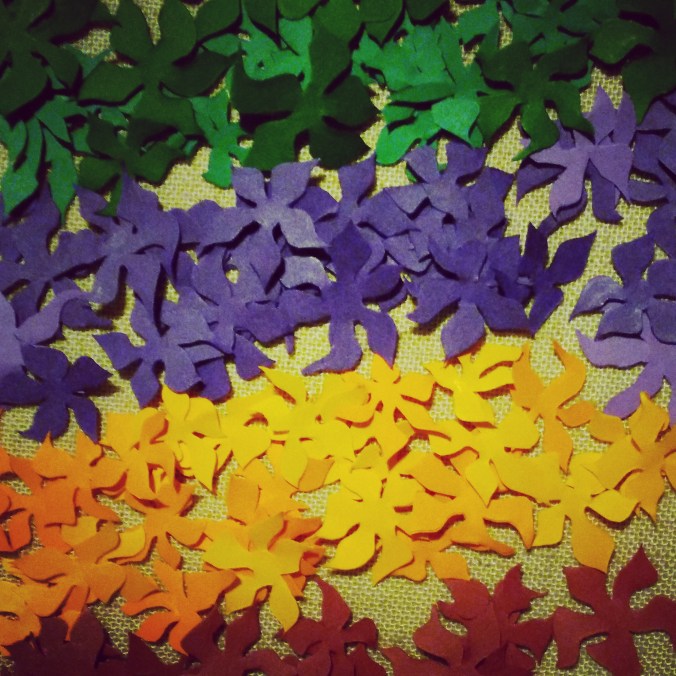
I find I can sit and cut the little beauties above for quite some time and keep my sense of presence with the motion of the scissors and the curve of the petal. I use these flowers or stars or whatever you want to see in them in several ongoing projects at the moment, accumulating bagfuls of different coloured flowers as some painters may accumulate paint.

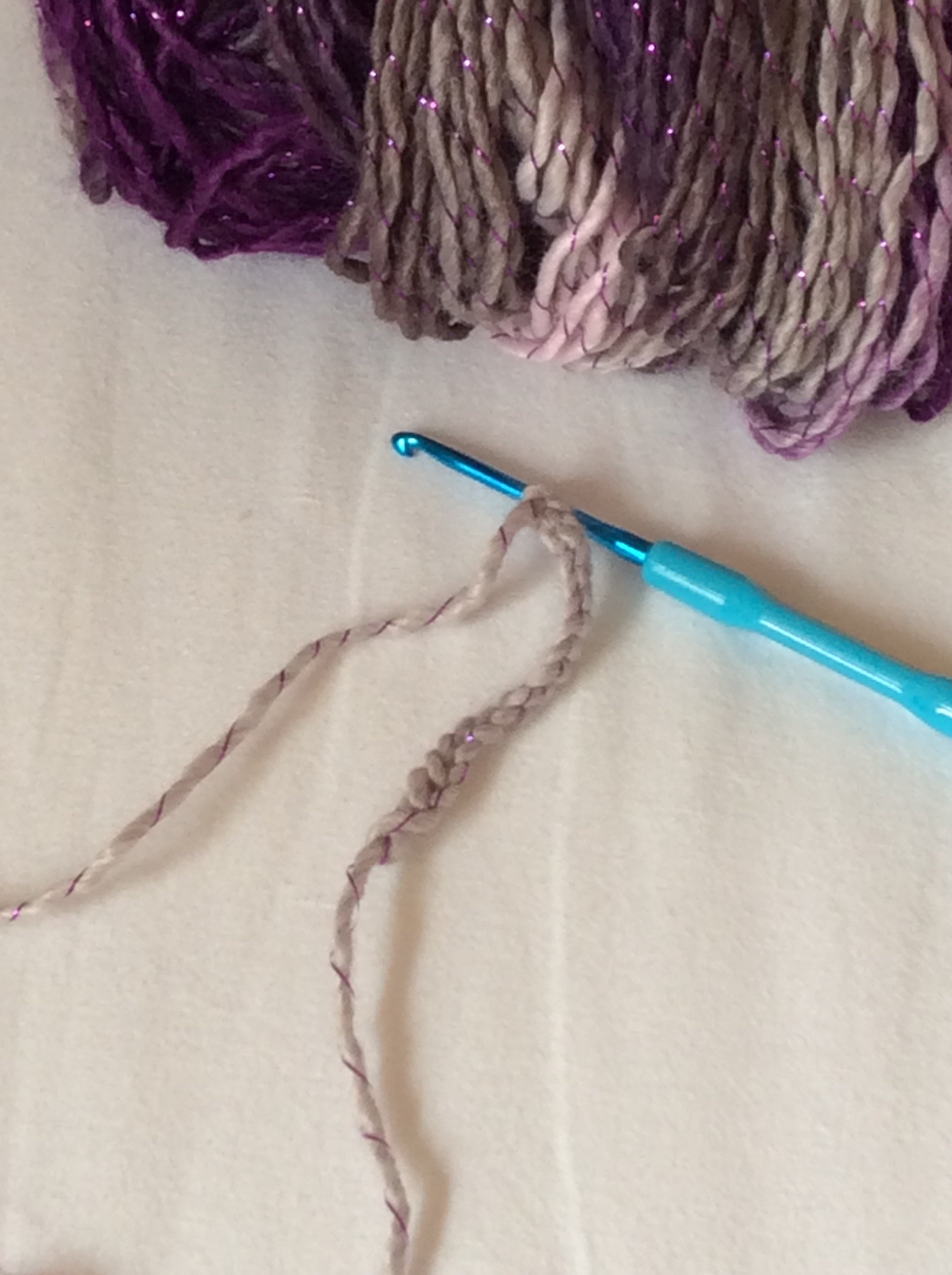
I know many people are finding colouring books helpful, and I have some really beautiful ones, but I have to say that they are not for me. I don’t seem to be able to focus in the same way when I’m working to someone else’s design. The other creative space I have found for a mindful practice is crochet. I’m only just learning this one, but there is something calming about the process of producing loop after loop, and working those looks into a growing creative whole.

There has been much said about the mental health benefits of creative work. I suspect that the mindful element to it is only part of what is happening and the way in which art can provide a useful channel for expressing, sharing and understanding emotions is potentially far more powerful in helping people. But I’ve found in my own creative space, a little work on mindfulness has been very helpful for me.

On micro-pubs and kissing gates and playing in the woods

Things in Britain have been a bit grim, of late. As a people we have been subject to deeply irresponsible campaigning and stark poverty of leadership by our politicians which had led to a horrible legacy of resentment, snobbish accusations of ignorance and overt racism over the Brexit decision. This comes on the back of several years of not very covert persecuting the poor and the disabled. This is particularly cruel as it feels like years of (as yet very unfinished) work to rid ourselves of racism and prejudice have been swept aside as  old nastiness has been re-legitimised. I imagine that from the outside Britain at the moment looks like a cold, grey country where people on different sides of the debate throw verbal, or actual rocks at each other. It’s all very depressing, and can make it very difficult to recognise what, if anything, is great about us.

This is not helped by the fact that as a nation, the British are not really known for selling themselves well. We tend to be sceptical of positivity and suspicious of enthusiasm. Frankly we don’t actually like it that much when it’s sunny, we would rather a grey day which legitimises a good moan and a bit of black humour. It’s part of the national mind set to play down anything that looks like a good thing. But there are many good things about Britain. Last weekend I went home to visit my the Cotswolds and was reminded yet again of the shock of the sheer lush beauty of the British countryside in the summer. My boyfriend and I went for a walk in the woods and were promptly surrounded by vibrant green leaves, cheerful dogs out for a walk and a series of makeshift huts and campfires. Evidence of children playing in the woods. These are all things to be joyful about.

IMG_20160807_114444

My boyfriend and I really like to do two things together; to walk in the countryside and to visit the micro-pubs that seem to be cropping up all over Kent. We will often plot a route that will take us through the countryside to end, conveniently, at a small town known to be the home of a micro-pub.

The micro-pub is a relatively new concept, or a very old one depending on your perspective. The idea seems to be to strip out all of the distractions you find in a larger commercial pub. Gone are the TV screens, gambling machines and loud music. In some of the pubs I have been in, like the Long Pond in Eltham, or the Penny Farthing in Crayford there is a restriction on using your mobile phone. This frees the environment completely for customers to enjoy their pint and the company of their friends (or a good book, should you prefer one). I have found every one I have been in so far to be welcoming, and the people who run them knowledgeable about their local beers and ciders. I thoroughly recommend this very British way of spending an evening.

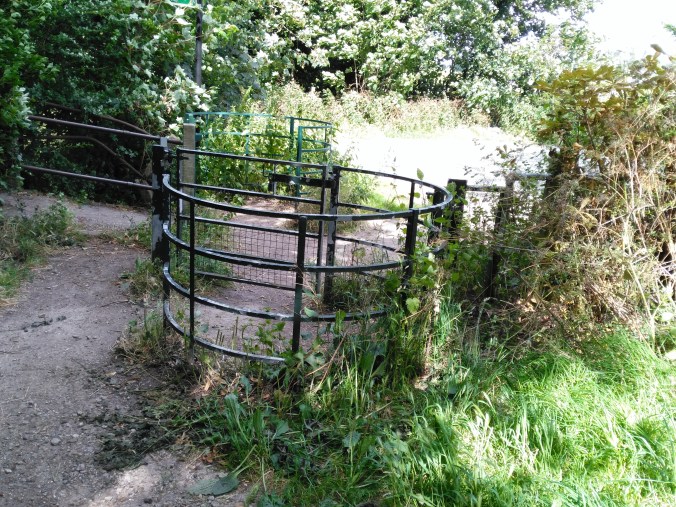
On our way to the pub we will often walk on an official footpath which will take us away from the roads and into the woods or the fields. One of the great defining features of a British foot path is the Kissing Gate. I believed they were originally invented to prevent animals from straying onto land where they should not be, but they have the added function of preventing horses and cyclists from using some paths which means that now and again us walkers get to tread a little bit of countryside alone. They also mean that my boyfriend can playfully insist that we go no further down the path towards the pub without a little kiss. Or a long one, depending on our mood or our thirst.

IMG_20160710_152148

For me these kissing gates, and these micro-pubs, are symbolic of the conflict within in the British character. We don’t like to be seen as too liberal in showing off our emotions. At the same time we build these funny little things into the fabric of our everyday lives that encourage a little playful affection, and a little moment to talk with our friends in a quiet corner.

For more kissing gate or micro pub related photos you can follow me on instagram here:

@rose.thompson309


Business bites: books I have read

My day job involves a lot of research. It’s what comes naturally to me, so when I decided that I would like to have a go at starting a business, a subject I know nothing about, the first thing I did was start to research how to do it. I’ve made a start with the reading and so far I have encountered a number of books that have a relatively passive aggressive tone of voice, are big on talk, and sadly rather thin on practical content (I’m not going to name names here). I have, however, have read some or all of 3 books which I found actually useful;

  1. Art, inc: The essential guide for building your career as an artist. By Lisa Congdon and Meg Mateo Ilasco. I really liked this one. It was probably the first book that made me think that a creative business was something I could actually do, rather than something I could just think about. I had 2  big take-homes from this one; a) you can be a professional artist even if you haven’t gone to art school and b) the importance of multiple small streams of income for artistic careers. This was a bit of an eye opener for me, I am used to getting a salary at the end of the month so this gave me a lot to think about in relation to my personal finances and ‘doing things differently’.
  2. How to start a creative business: The jargon-free guide for creative entrepreneurs. By Doug Richard. This book lays out how you may want to think about getting started, in a really straight forward set of chapters that describes business type things, step by step. It asks you thought provoking questions about your product or service, who your market is and where you sit within the market. Again really helpful in structuring the way you think about what it is you are actually trying to do.
  3. I can start your business: Everything you need to know to run your limited company or self employment – for locums, contractors, freelancers and small business. By Russell Smith. I’m reading this at the moment. I’ve found this really useful on explaining what the difference between what being self employed and running a limited company is, how the decision to be one or the other may impact on tax, and how you need to handle that. These are basically things I didn’t understand before hand, and now I have a better idea. I also rather like his tone of voice, which is very British in a self deprecating way. Russell Smith also runs a blog here and offers lots of additional support if you have further questions after reading it, so a good investment I would say.

While my research won’t end here, these are the books I’ve found useful so far. I would add that they are full of practical details and ideas to actually do things, and so are a productive place to start.

Georgia O’Keefe at the Tate Modern: on being fed

IMG_0073

Today I went with my parents to see the Georgia O’Keefe exhibition at the Tate Gallery.

First, I will say this is definitely worth seeing. O’Keefe was one of the first abstract artists, exploring different forms and ways of painting well before many of the male painters who are now famous in the genre. For me what is possibly more important is that she was open about her attempts to translate emotion or experience into paint, colour, and shape. A little note by one painting explains how she thought ‘it may be a kiss’. Her work has some the most beautiful lines and uses of colour in it that I have seen. These are emotionally provoking, sensual and bold works. Many people have written more elegantly about her than I am able to, and if you want to know more about her life and work there is a great BBC documentary about her on i-player at the moment as part of the Imagine series, so do watch that.

I really enjoyed seeing these paintings and will probably take a second trip before the exhibition closes. But something happened today that I wanted to write about. My mother is an artist. I don’t actually really remember a day where she hasn’t spent at least a little bit of time in her studio, painting. She’s in her sixties and rather than winding down, she has started experimenting with different types of medium and doing more work in drawing than I remember her doing when I was young. Today my mum want commenting on how powerful it was to see such a body of work by a woman, all in one place. She was really struck by how unashamedly feminine O’Keefe’s work is, and how brilliant she is as a painter. I felt this way after seeing Mary Dumas in the Tate Modern last year. We had a little discussion about how men seem to make all the decisions abut who gets to be seen as a great painter and who does not, and how their decision making, frankly, is rather limited. I was really struck by how powerful it was for my mum, who had been an artist all her life, to see a woman painter given such a platform.

Now here’s the thing. I have more than once said to people that if you are a creative person that you need to feed that creativity, you need to see other creative works by other people and draw energy from that. But I don’t think my thinking had gone far enough into what we are being fed. For such a long time the arts world, across writing, performing, visual arts and music has dedicated such a large proportion of it’s platform to the middle or upper class white male that we seem to have got used to only ever eating egg and chips. Our palate is narrowed by what it is exposed to. To see this body of work by a woman is powerful not just because she is a brilliant painter, but also because her success feels transgressive. It’s water-mellon and mango and sashimi. I know I’m not the first person to write about this, Virginia Wolfe was writing about the exact same thing in ‘A room of one’s own’.

But sometimes things need to be said over and over before they are actually listened to. We are not being fed. Women are hungry. People of colour must be ravenous. Disabled artists are surely absolutely starving. Frankly when did anyone who was working class last get a good meal? The Tate Modern has been making efforts for several years now to really give a platform to artists who represent a much more diverse perspective, and I think this is can only applauded. Let’s hope that they continue to do more and more of this, and to create a great buffet that many more people can appreciate. But it’s not just up to the Tate Modern. We need to demand more diversity from all of our cultural institutes. And we need to keep demanding it until egg and chips is just one item on a splendid, mouth-watering menu.

Working on my craft

A few weeks ago I watched a documentary about origami on Netflix called Between the Folds. The documentary covered a whole genre of origami called wet folding, that I had never heard of before. The premis is that you work with wet paper to produce fluid, soft form paper sculptures. The results were really beautiful, and the doc is well worth a watch.

Both my parents are artists and when I was young my dad taught me how to stretch paper when you want to paint to avoid it warping when it makes contact with water. I think this was probably the first time I’d encountered a way of working with the paper’s memory rather than trying to work against it.

I think about how I work now, which involves paper cutting and sculpture among other thing with paper as trying to work with a paper’s memory. Whatever you do to paper will change it, even after you erase a drawing there will still be a ghost mark of the drawing you first made. In my own work I make the paper or card silouette and then use objects to mould it around before applying more layers of paper and glue. What you get at the end of that is more like a hard shell than a fragile changeable bit of paper so it’s important to work out what the card will remember in terms of shape right at the beginning. Get this wrong and what you get is warping and movement in the wrong direction. 

At the moment I’m still in the process of experimenting. What works best? Which is the best way to curl a bird wing? How think is the paper and how long can I fuss with it before it will fall apart? It’s learning in a very physical, tactile and mindful way that’s quite different to other aspects of my life. I’m enjoying the journey so far.

Getting started

Caberet yarn from Stylecraft

I’m down on the south coast with my boyfriend and his family. At the moment he’s sitting outside with his hoodie pulled up over his head, scanning the Internet on his phone and looking like something out of Mr Robot. Yesterday we went scavenging in the craft shops and I bought some wool and some crochet hooks to try a few new things out. I bought a ball of the cabaret wool from Stylecraft as I really like the texture of it and the blending of colours. Crochet is something I’ve come to quite recently and really like for the simple meditative actions of the work involved.

Over the last few months I’ve been thinking about starting my own small business around some of the craft things I like to make. I like to work with paper and glue. I make small decorative pieces from a mix of recycled and arts quality paper. I like the silouettes of cutting paper into different shapes and the textures that can be produced by creating delicate overlapping layers of those shapes. I also like using wool and copper wire, Perspex eyes for soft animals, or other bits with radically different textures to catch the eye. I’ve not really struggled to come up with ideas for ‘products’ but finding the time to finish off the prototypes has some times been an issue.
What I am struggling with is how to turn my messing about with bits of paper and glue into an actual business. I keep thinking of things I should  be doing, like keep a drawn record of all my designs (mostly they come out of my head through my hands and into a physical piece). The further I go down the road of trying to create something the more questions I have;

Do I try to find a shop that will take some pieces or just go online?

If I go online which platform is best for my stuff?

If I go online how will I package and post these things so that they arrive in one piece?

What does this all mean for my tax (I also have a day job)?

I’m going to blog about how this all works out in the next few months, more to keep a record for myself so I can look back and see how far I’ve got a year from now. I’ve just downloaded some books on tax and book keeping, and there is more research to be done, but it feels good to be creating something right now.