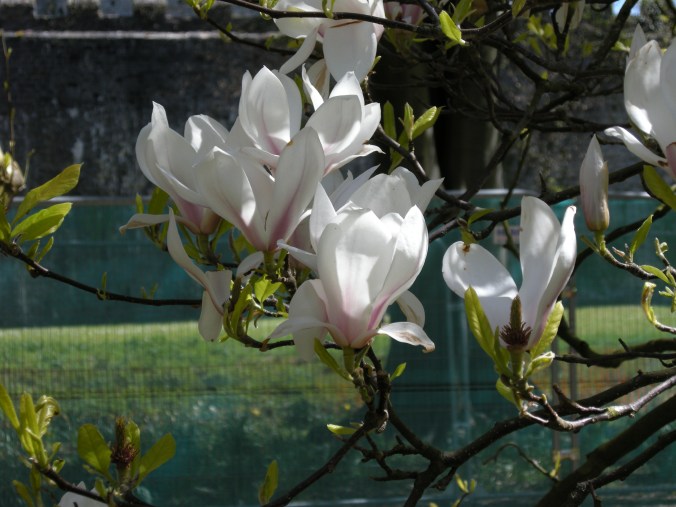
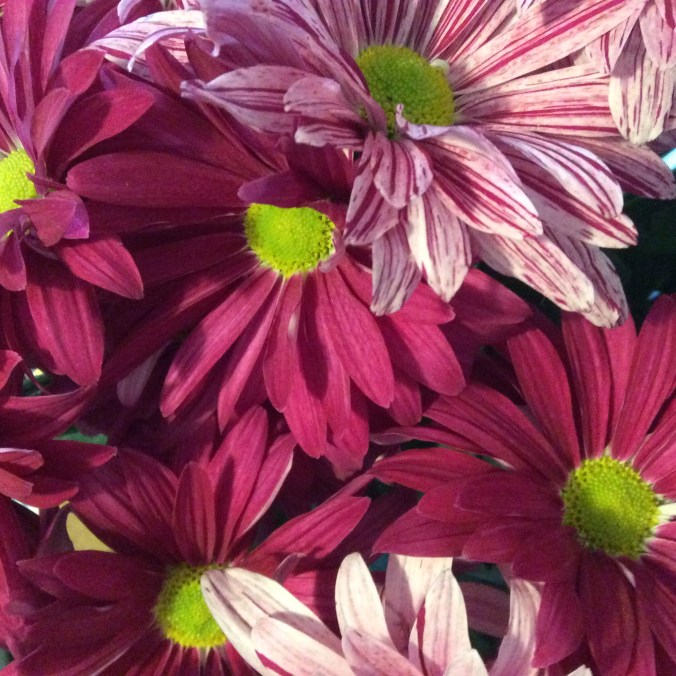
It may feel like winter now, but spring is coming

I was going to post this kind of thing over the weekend but am pretty tired right now and felt that, given recent events, taking a bit more time to think about things was appropriate. It’s autumn in the UK. I really love autumn and I really love spring in the UK. I feel at my most creative in these seasons that bring about profound changes in our environment. 
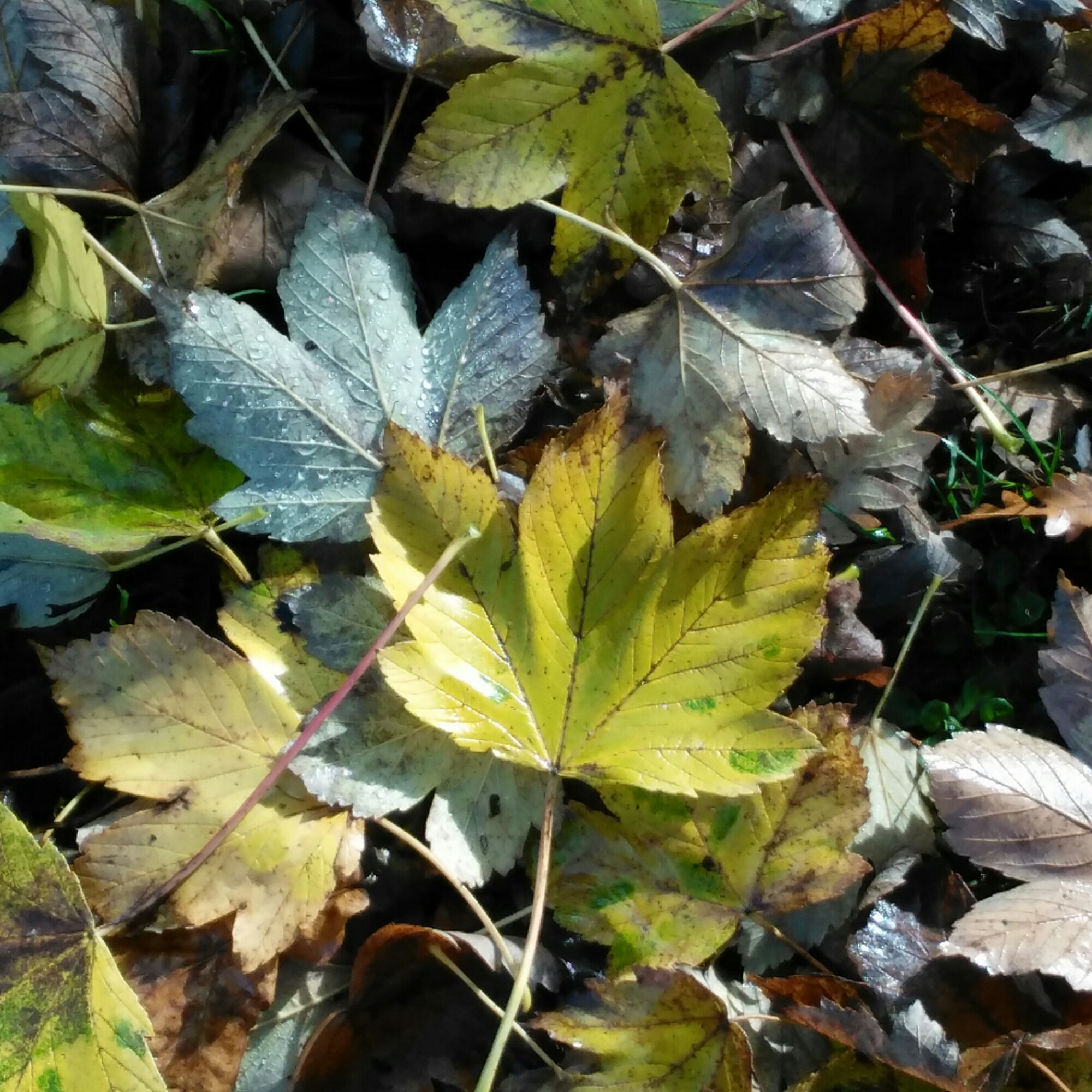
At the weekend I was with family in the Cotswolds and had some time to get out with the boyfriend into the woods. I really love being in the woods, tramping about in fallen leaves and taking in big lungfulls of air freshly oxygenated by the busy trees. Kissing over kissing gates. It’s relatively well established now that spending time in green spaces is good for us. It can lower blood pressure and improve our sense of wellbeing.
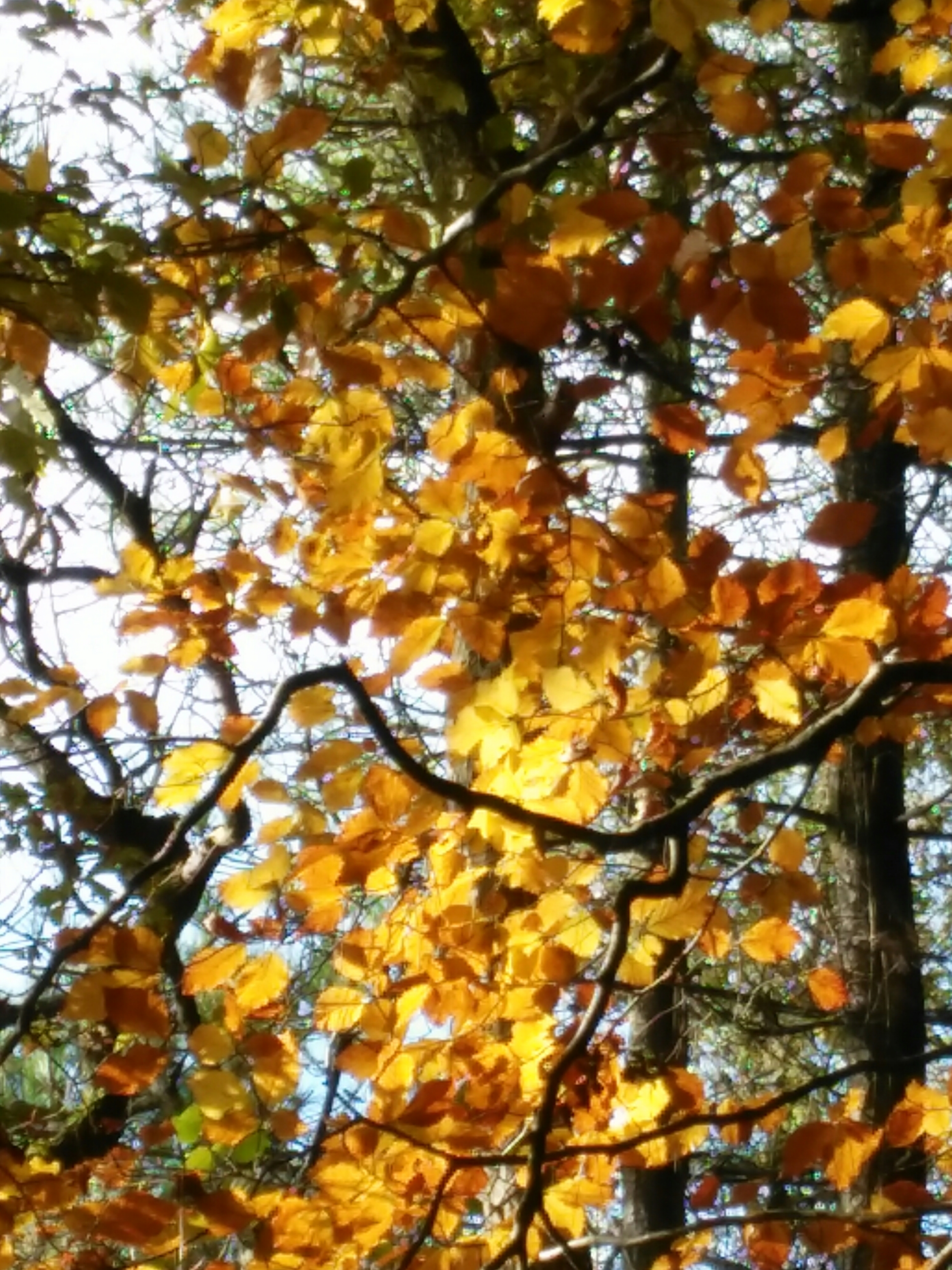
There is a deep wisdom to be found in the woods. You can see this in the vibrant last flare of autumn, the bedding down of leaf mulch and slow winter decay. The rotting leaves release nutrients back into the soil, preparing the ground for the furious blooming of spring to follow. You can also see it in the busy, vibrant and glorious displays if diversity. In this, I believe nature shows us the way.

I’ve been thinking about these cycles of decay and of renewal. It may feel at the moment for many that we are sinking into a state of spirutal, moral and intellectual decay. This is a moment we should pay attention to. It’s time to bed down and prepare the ground for the spring that may come. It’s a time to decide what kind of ideas, what kind of people and movements, what kind of blooms, in all their splendid diversity, we will nature into growth in the coming spring. It’s time to make plans about how we can give those blooms our fullest support. It may feel very much like winter now, but spring is coming.

You are here by Jenny Lawson

So being ill can have an up side sometimes. I’ve been unwell with some awful head cold [wo]man flu and haven’t been able to do much work. I’ve been mostly sleeping, drinking honey and lemon, and watching telly, with a little web surfing on the side. The web surfing turned out to be a little too exciting for my ill brain and I’ve had to wait a few days before I was able to form a coherent thought about this.

I came across Jenny Lawson’s memoir Furiously Happy, at least a year ago through one of those Amazon ‘and you may also like’ recommendations.  I loved it, having been bought up in the country with my own bunch of eccentrics, and from there I went on to read Let’s pretend this never happened, which I also loved. These books are very funny, and great books for anyone who has ever wanted to hide under a table at a public event (or regularly finds themselves taking a ‘time out’ in the office loo). Earlier in the week I wasn’t very well and couldn’t do much more than sit in bed and surf the internet. I spent some of that time diving into the Bloggess website and it was the first time I was able to have a really good read about her colouring book You are Here.

I really think this post is worth looking at for anyone who uses arty creative things as part of their efforts to manage mental health. Jenny Lawson writes vividly about her own arts practice (I have no idea if she would call it that, but her drawings are works of art) continually using drawing and doodling as a way of channeling negative or distressing thoughts or emotions. She is releasing a colouring book based on these drawings, alongside some short stories that work with the drawings, and what a beautiful thing it is (at least it looks that way from the pictures – the physical book won’t be available for a few months). Just go and look at the sweeping curves and swirling lines of some of these drawings. I really love how these drawings are intricate, and delicate, effective in evoking fairytale and myth. Somehow exciting and soothing to look at at the same time. I’ve ordered my copy, and I can’t imagine anyone not enjoying getting creative with this set of drawings. Or just owning them. Anyway, go and look. Now.

Don’t for a minute think about stopping you lovely bunch of creatives

p1000345

[EDIT: So I had a nice formal sounding title for this post, but then I went and changed it because this feels better in getting across what I want to say]

I was procrastinating before work this morning and read this article from George Monbiot on the Guardian website about neoliberalism and loneliness and mental health. I thought it was an interesting article and feel he has a number of valid points about how the two things are connected. I was particularly interested in the scientific work he referenced about the link between stress, pain and physical contact. Anyway it’s a good article – I’m not going to re-write what he says here – go check it out for yourself.

The article this morning happened to come to my attention just two days after I had stumbled onto the work of Prof. Paul Crawford from the University of Nottingham after I me him during a day job event. Paul has been suggesting some really interesting ideas about how we enable people to use arts, humanities and creativity in looking after their own mental health and in their recovery from mental illness. He has a particularly interesting ideas around some form of collective healing through arts and humanities. He’s recently published a book called Health Humanities on the subject with Brian Brown, Charley Baker, Victoria Tischler and Brian Abrams. I’ve not read it yet but I’ve downloaded it and will be putting it on the list.

Both Crawford’s talk and Monbiot’s article have lead me to thinking a bit more about our culture and the role of arts in it. I feel over the last decade and probably for longer there has been this odd political positioning of people who are ‘Artists’ who get to do the making of things, and the rest of us as consumers, who are consumers who are meant to buy things. And things have become very easy, and very cheep to buy. This feels like quite a different situation to the one my parents and grandparents grew up in. My grandfather would probably not have called himself an artist, but he could make anything, and it was common for people to make things for each other, like jam. I like jam.

When I was younger I think I had quite a dismissive attitude towards people who made things (unless they were one of those special, magical, serious people, a proper artist), especially people who made things in groups or clubs. I was a child of the 80s, and while I grew up in the countryside without much stuff, the prevailing political climate was one of stuff worship (and not hand made stuff either). I’ve completely changed my mind about this. For people to gather together to share their making, like a meal, or to make things together, like kitting or music, or in staging a play, is a profoundly creative act. To be connected to each other through our creativity is a profoundly human one.

I think there is a backlash towards this at the moment, and it is thrilling. The internet used to be full of cats. Now it is full up of people having a go at being artists. And crafters and cooks and gardeners and poets. And people making Jam. It is full of artists cheering on other artists. A community or creatives supporting other creatives. Brilliant. Don’t for a minute think about stopping you lovely bunch of creatives.

Cool artsy stuff with Jade Herriman

dscn1250

A few weeks ago I came across the blog of Jade Herriman. It looked like she was doing something interesting but it wasn’t until this morning that I had time to take a bit of a dive into her blog to see what was going on.

I really like her site. Jade is based in Australia and has set up an arts and mental health based business. The talented lady is also an arts therapist and a life coach. I particularly like a series of blog posts she has written about the effort and struggles it takes to set up a successful business, for example this one here.

Last week I wrote a bit about how, among other things, I’m not very comfortable with the current trend of calling colouring books or origami books therapy. They may feel therapeutic, but they aren’t what you would get from a skilled therapist. Turns out Jade has some similar thoughts, and can speak to this from the point of view of a professional.

Anyway, I really like what she’s trying to do, so go check her out.

Lessons on listening

img_0091

I’ve been thinking about what to put into this post for a week but have struggled a bit in working out what it is I’m trying to say exactly. I suspect there will be more than one post as I try to tease this out.

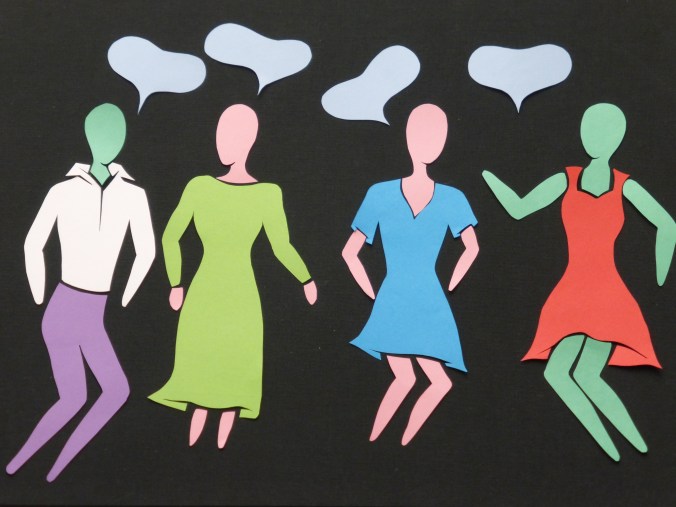
Over the last 5 years one of the most significant things I’ve learned is the importance of listening. In all of the important roles I’ve adopted at different times (researcher, manager, volunteer, artist, partner, daughter, sibling, friend) listening has been an important part of what I do (most of the time more so than any of the ‘talking’, truth be told). There has been a growing public conversation about the importance of talking in the mental health world in the last few years. There have been significant efforts to encourage people to reach out, to talk, and these are really important. There are multiple platforms through which we are able to connect, digitally or otherwise, but often little thought is given to the ‘listening’ that this assumes. For someone to reach out and actually find some comfort there needs to be a Listener. I think for these efforts to be truly successful we need to develop not just the capacity of our community to talk, to express themselves, but also the capacity to listen. And ‘just listening’ isn’t as easy as it sounds.

Listening well is actually an important skill. I once had a boss who huffily told me ‘pah, listening. What is listening? I listen’. In doing so interrupted me mid-sentence and failed to hear the complete thought I had at that moment about the importance of being heard. This was not a good example of listening. During the past few years I have done some training on my listening skills, and volunteered for a time to have long, careful conversations with people who are suicidal. Here are a few things I have learned:

  1. Everyone has one infuriating friend who will continually tell you the same story over and over, or make the same point over and over. Think for a moment. Is it possible that this person feels like they have never truly been heard?
  2. Listening well is an act of mindfulness. Truly listening to someone requires you to be present in the moment. It requires you not to sit there agonizing over what clever witty thing you are going to say next.
  3. It’s ok not to know what to say next. Silence can sometimes be your friend.
  4. It’s ok to ask ‘I know you are going through something. Are you ok? do you want to have a cup of tea, a little talk?’
  5. It’s ok not to have any answers, to not know what to advise. Often people, both in their good times, and in their bad times, aren’t asking for advice, they are asking to be heard.
  6. Listening well, listening carefully to a person without a personal agenda, is an act of profound kindness.

On this blog I talk a lot about creativity and arts practice, and maybe this post seems a little left of field. But in my own arts practice I have found listening to be an important part of it.If you listen to other people well you will inevitably end up learning something interesting about the world around you, or about yourself. Listening is fundamentally rewarding, in that it adds richness and depth to your understanding of the human experience.