New work: Time to get wobbly.

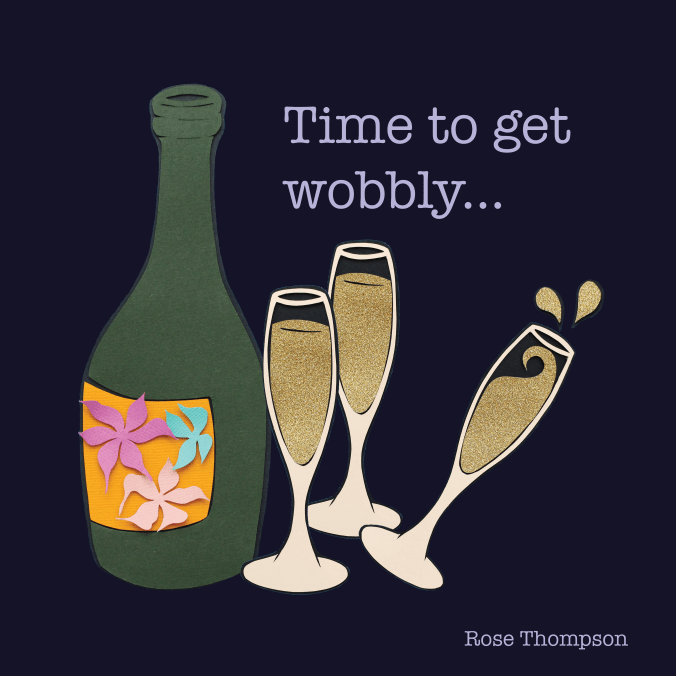
I’ve just added a new work to Redbubble. I was trying for something irreverent and funny. Possibly suitable for festive times. At the same time I tried to keep it simple.

time to get wobbly society 6 2

What do you think? I had made the paper-cut champaign bottle and glasses some time ago for an animation I did that really didn’t work that well. It’s nice to see them have a bit of a new life in this design. It’s a tangible reminder that things can go wrong, or not work out, but in creative work none of those efforts are really a waste. Some part of that experience, sometimes even the bits of work them selves that didn’t quite work the first time, can be useful in some other project later down the line.

Things with this thing on available here.

A little clip from my documentary, a long time work in progress

I have been working for some time on a documentary about a lovely man called Stuart Hughes for some time now. I really long time, actually. The outcome will probably be quite different to what I initially planned, as it’s a bit like ideas have been sitting in a slow cooker.

I have finally managed to put a little clip up on Vimeo. I would love to know what you think. You can have a here:

It started with a short wave radio… from Rose Thompson on Vimeo.

Fancy some things with my things on? My designs are available here. If you wanted to. Just saying: Threadless Redbubble Society 6 

Building an audience: Redbubble, Threadless and Society6

When I first started this website I was thinking about different ways to try to make money out of my art. In the last few months I’ve been trying out a few different websites that enable you to do this, and now have profiles on Redbubble, Society6 and Threadless. All three websites work on the model that you upload high quality digital photos to the website which can then be printed via good quality digital printing on a range of products, which include wall art, T-shirts, bags, clocks, mugs and stationary. All three sites give clear guidance on the file types and sizes you will need for the different types of product.

I have been thinking about writing this post for a while while I get the hang of using these sites. They all have positive features and drawbacks, which I will probably need to make a few posts on while I continue to get the hang of them. Here are a few early thoughts:

Control over how your design looks products: For me Redbubble have the clear advantage here. Their interface means that you can change the size, and position of your art on the respective product. At the moment Redbubble is also the only site in which you can have your image appear as a repeated pattern on the the product without effectively creating a new design. It is also relatively easy to change the background colour of a number of products, which isn’t that easy on the other two platforms. The other two platforms are much more reliant on the work you do to prepare your files in the first place in ensuring that your image looks good on the products.

Building an Audience: All three platforms operate a kind of internal social media system where you create a profile which is visible to other people who buy or sell art through the sites. In all three platforms you can follow other artists and hope that other people will follow you. The advice appears to be that most sales will be made to other platform users, so collecting likes, followers and comments is a good way of monitoring if your work is being seen, and of eventually generating sales. I have found that so far it has been much easier to build a follower base in Threadless, and Society6.

Threadless runs a regular design competition which enables you to submit a design and invite other Threadless users to vote on your design, which is great fun. Designs with the most votes are likely to be featured on the main website. There appears to be a core group of people who participate in voting in these competitions on a regular basis, so it is a good way of getting your stuff seen. I have a design up at the moment, you can have a look here.

Society6 has an App (unfortunately only on iphones/ iPad at the moment) which functions a bit like instagram, which means that it is relatively easy to scroll through other people’s art and find artists that you like. Commenting and liking other people’s art is a way of drawing attention to your own work, and I have been relatively successful here in a short period of time.

I have found Redbubble less easy to negotiate when trying to build up an audience. While you can participate in challenges, forums, comment on people’s work and follow people in Redbubble I have not been particularly successful in getting my stuff seen there. I don’t find the website particularly easy to use in comparison to the other two platforms for this purpose. I am not quite sure why I am finding it difficult, and this may possibly be a ‘getting the hang of it’ issue. They have a new App which again operates in a similar way to instagram, and which looks good. Unfortunately at the moment you can’t log into it with your profile so it’s not helpful in drawing attention to your own work through interacting with other people (I have been told they are working on a log in feature – personally I think this will really help). That said, I have made sales to people other than my boyfriend, or my boyfriend’s mum, through Redbubble, so it’s not clear to me that gaining lots of followers actually translates into money in the bank.

Getting paid: Both Threadless and Society6 pay through Paypal, and there doesn’t appear to be an option over the currency you are paid in here for either site. As both sites are American, I will be paid in US dollars, while living and designing things in the UK. Redbubble again is the winner here – you can choose to be paid directly into your bank account and you can also choose which currency you want to be paid in, which definitely works better for me.

Tax: For all sites you are responsible for paying income tax in your own country on your earnings. You may also be responsible for paying sales tax in the countries in which your art is sold if you make enough sales to take you over the relevant country’s tax threshold, although they appear to collect VAT so it’s not entirely clear. I am not sure what this mean at the moment, I have some more research to do here.

Those are my thoughts this morning – I am sure that there will be more to follow. I would love to hear about other people’s experiences about using these platforms.
 

Work in progress – from start to finish

This is a post I have been thinking about for a while, but I haven’t quite had the time to pull everything together. It’s a kind of start to finish look at a single piece of work. So here goes….

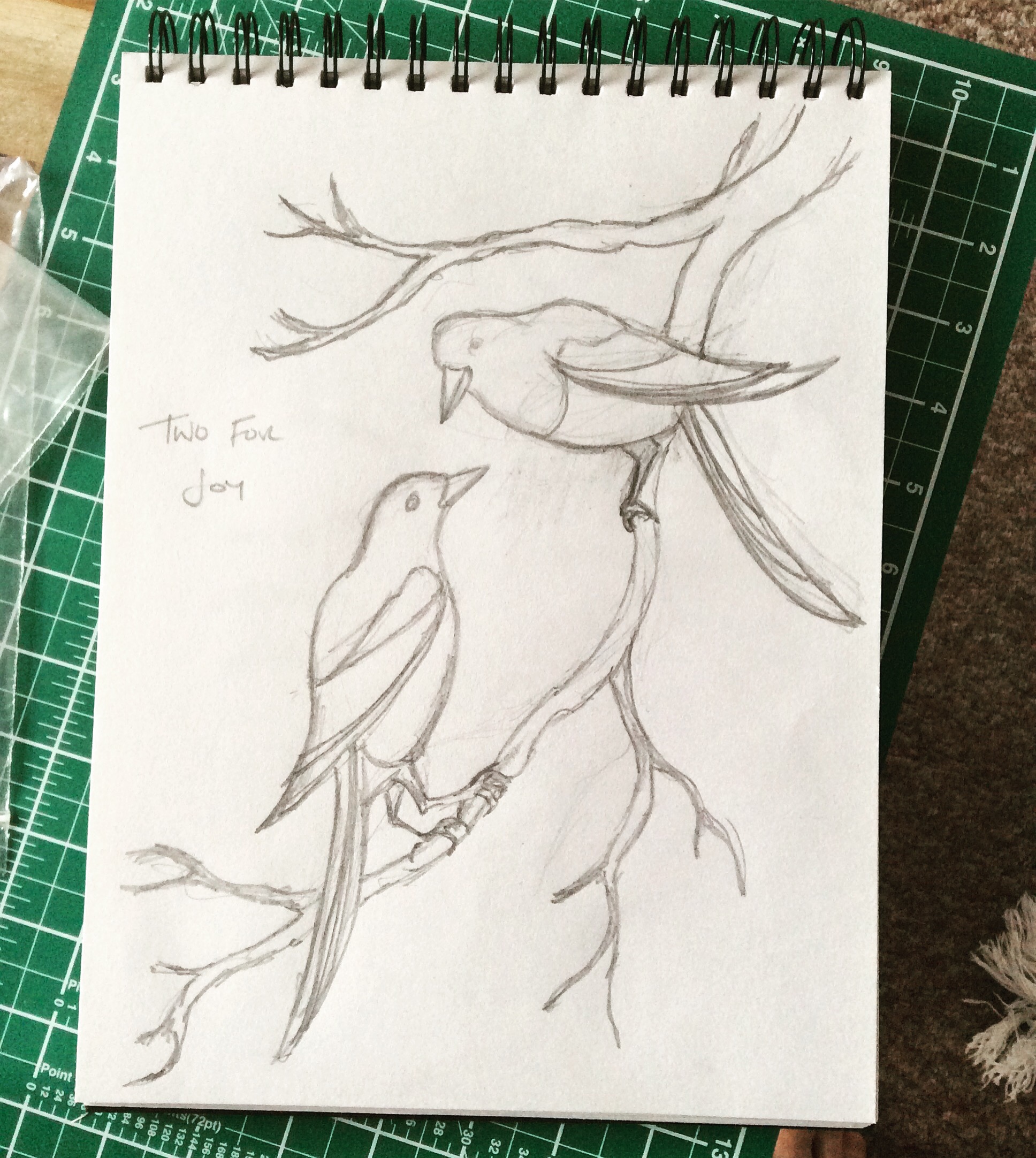
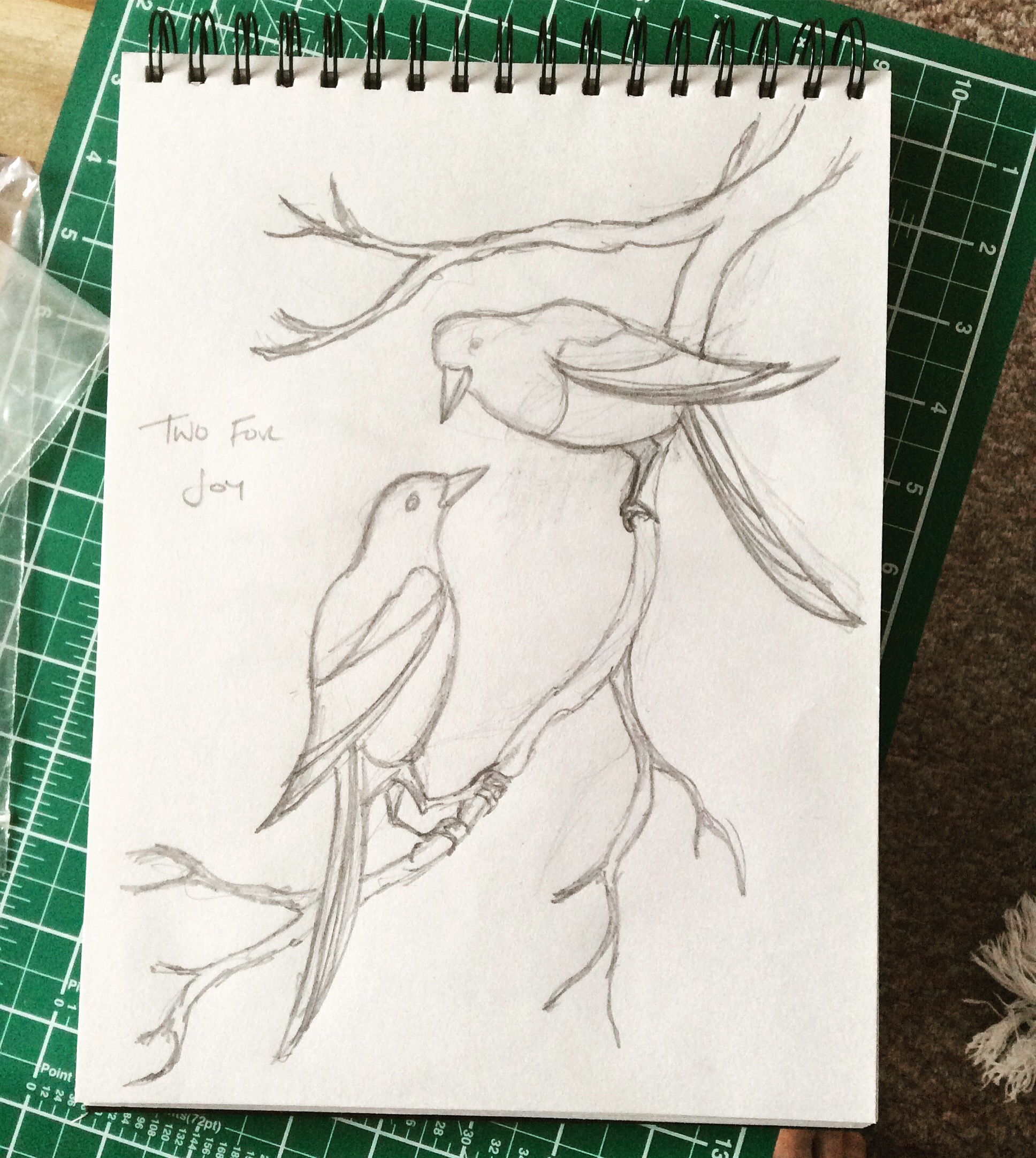
First there is a sketch, which in the case looked like this:


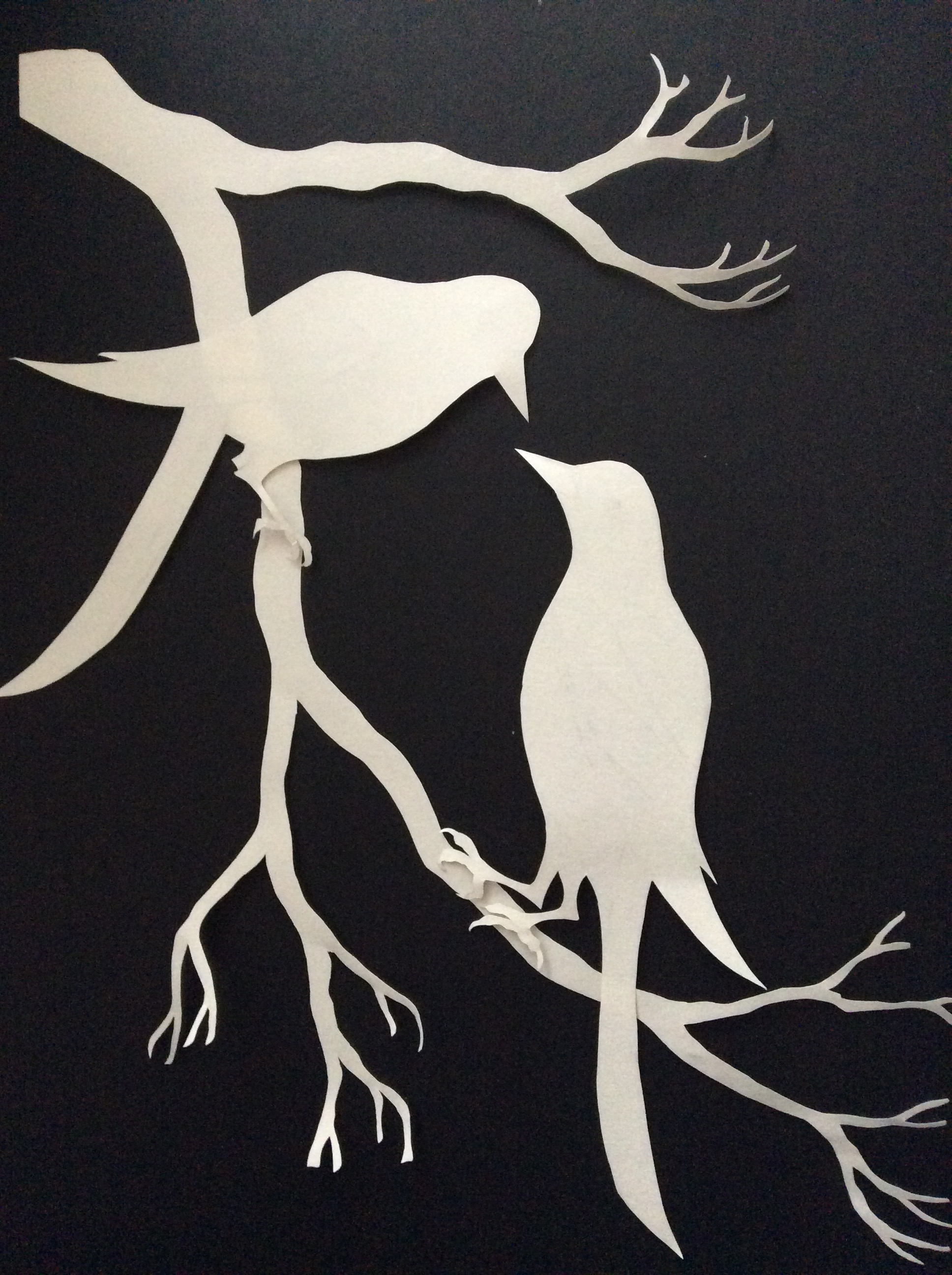
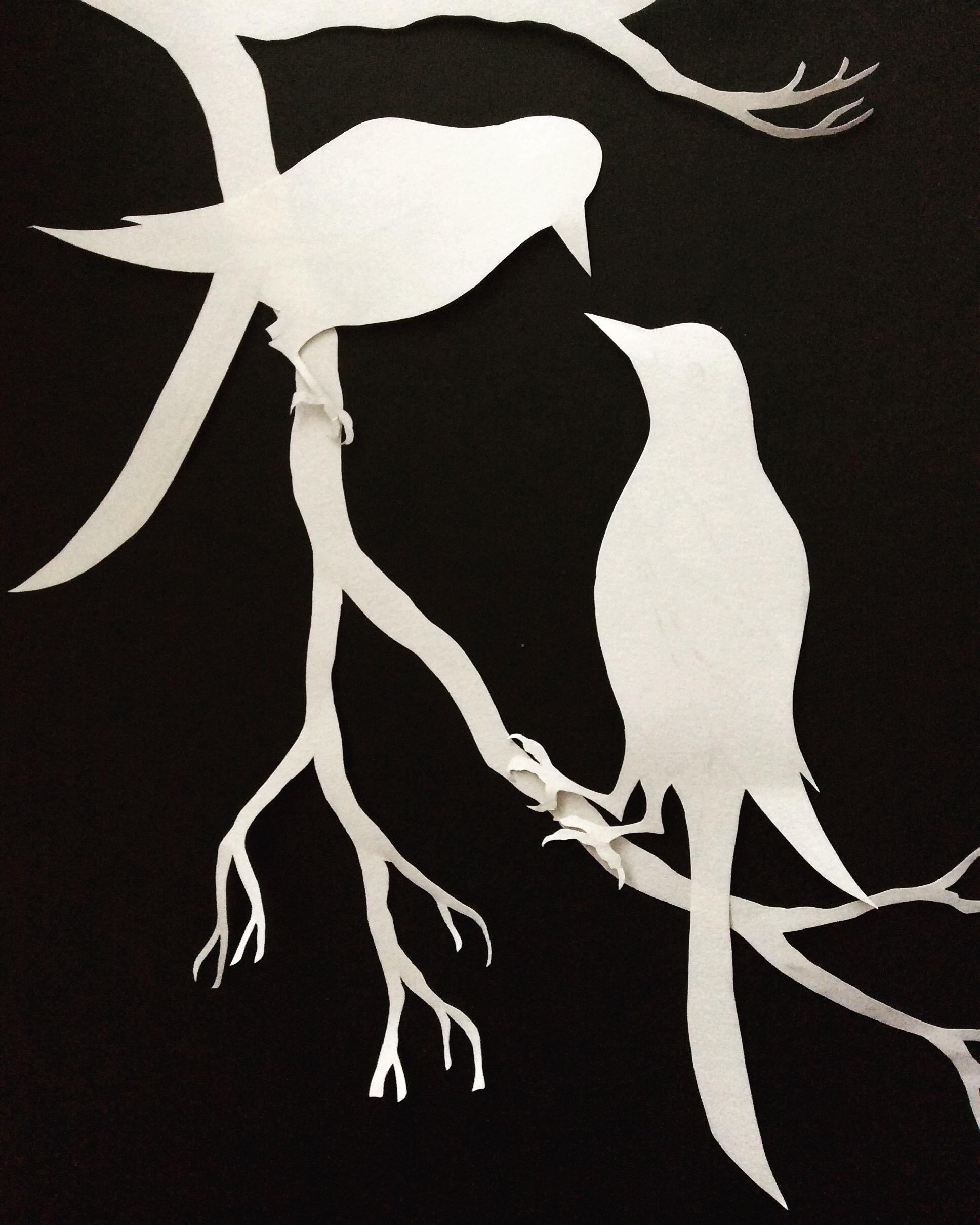
The majority of my art work then basically involves me sitting for some time with sketches and and a pair of scissors. I normally end up with a kind of white silhouette in reverse of the original sketch. I really like these, I think they are really elegant in their own right and am thinking about doing some work based on these alone. Let’s see.


After this stage I use these white bits of paper as stencils for working with different kinds of coloured paper to build the final image. This results in a series of movable pieces coloured paper that I can start to place together in different ways to form the final image. With the magpies in this case I used pritt-stick just to lightly glue them together as the whole magpies were much easier to move about than the individual bits. Here is the skeleton of the magpie image.


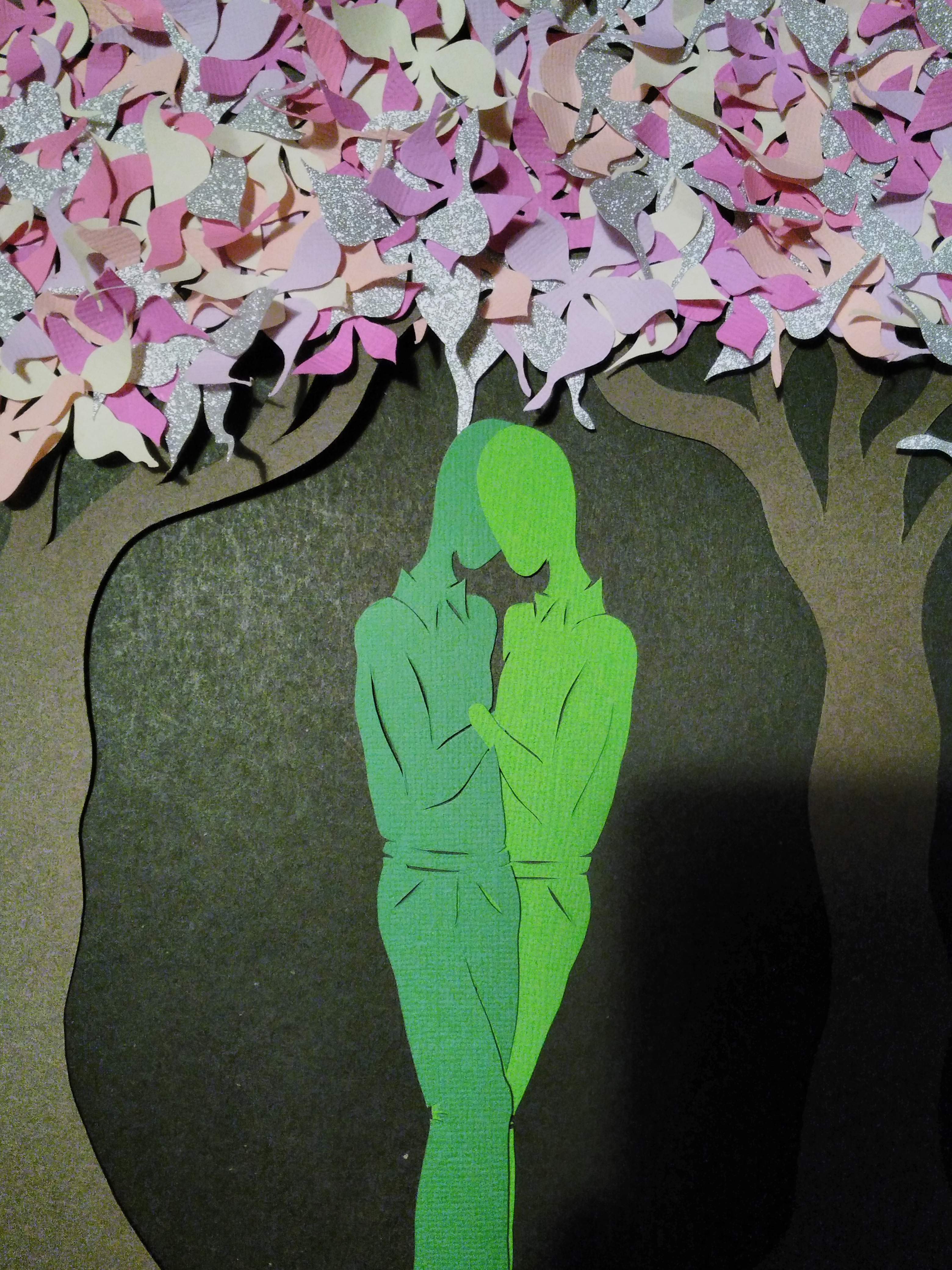
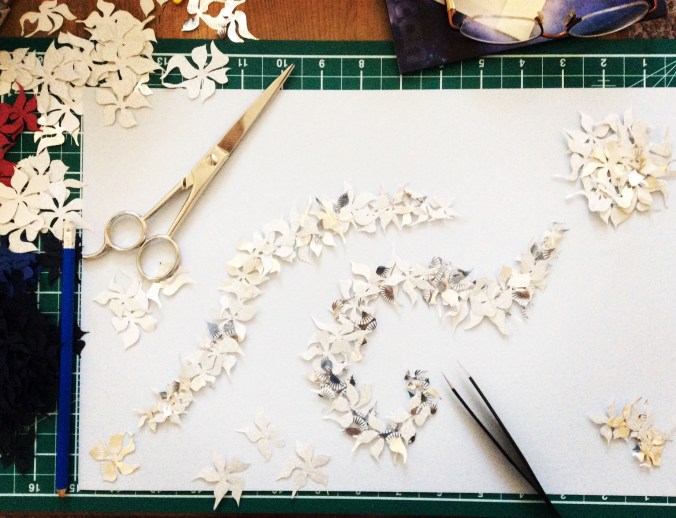
Then I will probably add some paper flowers, which are becoming a bit of a signature feature. I have stockpiles of these. I have cut so many of these now that I can cut them free hand, without really paying too much attention, in front of the telly.

I like to back most of my images up on different kinds of cloth. This image below is backed with a white Kashmir silk scarf that I bought while on holiday with my sister in Dubia. Most of my work involves physical materials, things that I can feel and manipulate directly with my fingers. I am becoming increasingly aware of how excited I can get about different textures in my work – in this image I particularly like the contracts of the smoothness of the paper against the very delicate pattern woven into the silk. Now I take a digital photo.

Two for Joy Raw

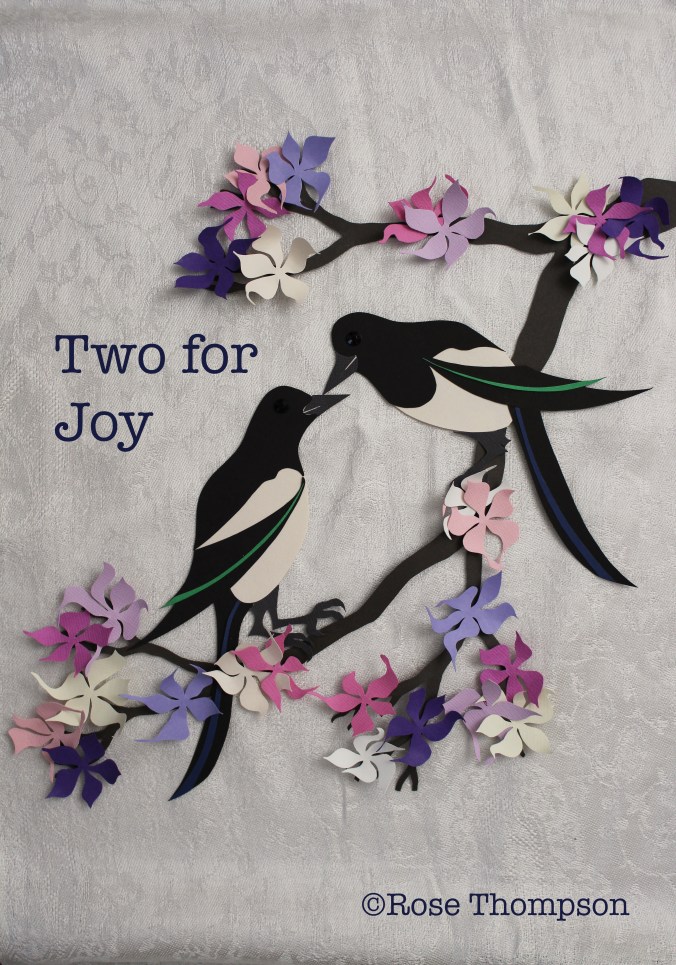
Finally, just at the end I will jump into photoshop and do a few tweaks. For this one I very slightly brightened the photo and increased the contrast. I then added on a sepia filter to warm it up slightly, and I finally added in some text. The final image looks like this.

Two for Joy - final

Available on a range of things here at Redbubble.


Street poetry

Seen while out and about – street poetry. I rather like the sentiment, I’ve been working on a film that will look (if I ever finish) at how we can tell good, authentic stories about trauma and distress. It’s a complicated thing, because while our brains like simple, linear stories, people’s lives are often far more messy than that.I think at the moment my question is how do you tell a good story about a whole person, rather than an event?

What do you think.

 So a bit of a thought in progress – more to follow I think.

Works in progress

I’ve spent a lot of time today trying to finish some artwork for my documentary. I’ve been trying to us a mix of different textures when choosing paper and I think the end result looks nice at the moment. The process is very time consuming, and I think I’m going to need to factor in more time per animated sequence. 

I’ve been reading about the slow movement recently and see parallels in my chosen materials and methods at the moment. The time needed to complete the pieces I’m working on at the moment means that the results emerge slowly, and I have to have a bit of patience with the process. Rushing this kind of work may lead to quicker results, but the are frequently less successful than the ones I develop slowly, with plenty of thinking time built into the process.

Experiments in paper cut walk cycles

I’ve been putting a lot more thought into my documentary film recently. I’m really interested not just in telling a story but in using the film to look at how you can choose to tell stories about trauma and mental health. I’m also interested in working out how you tell stories about people in a way that doesn’t reduce them being ‘that guy that the thing happened to. I’m not sure I’m there on that yet.

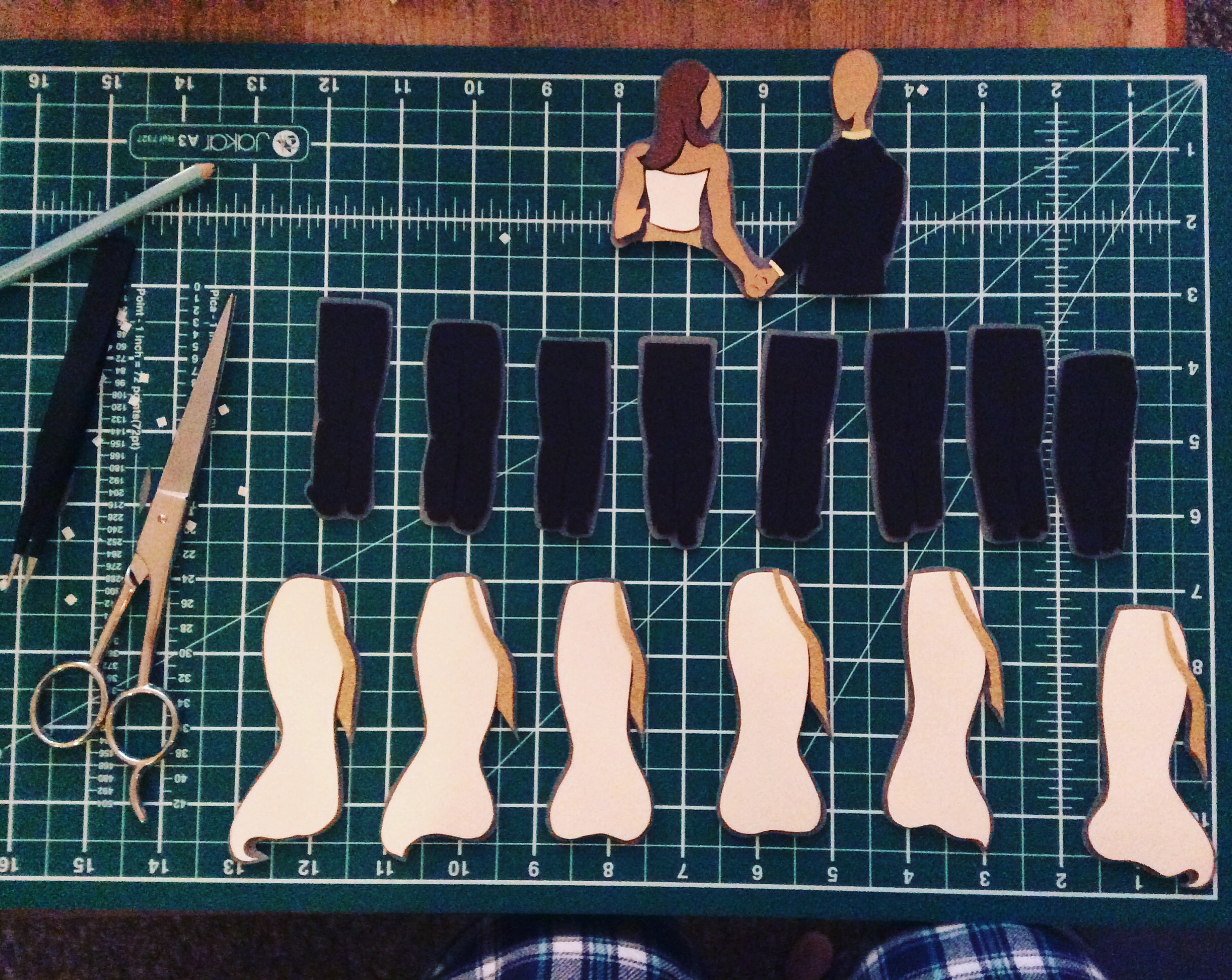
At the moment the majority of the actual film footage I have is of interviews. Personally I really like the style of doc where the film maker lets a person tell their story like this. However it’s visually not that interesting to look at. One of the aesthetic decisions I have made is to try to animate some sections of the interview footage, and to animate where I only have audio material. Here’s a photo of an experiment with papercut walk cycles. I’m going to photograph these, and then feed the images into adobe animate to create a couple walking. I’ll let you know how I get on with that. 

Animation, especially using a papercut style imagary that I really like to work with, is a really time hungry process. As I’m squeezing in an hour here and there around a full time job it’s taking me weeks to produce a few seconds worth of footage. It’s slow going but I’m pretty happy with this. I like using sections of footage that visually suggest the story is a construction – as much as the footage is of someone telling their own story in their own words, it’s still it’s my take on it. There could be other ways of telling the same events.