A little bit of news – I opened a threadless shop!

summer 1 - resized.jpg

Over the last few months I have been working on ideas which would enable me to earn a bit of side income from my art and interests in creativity. I have been looking at different options and have been particularly inspired by the prolific Sableyes and his Little Fears project.

Having looked through various options I’ve decided to follow his example and dip my toe in the water with a Threadless Artist Shop. I’m a bit excited about this as it feels like I have been able to come to the end of a project with an actual product out there in the ‘real world’. I have picked a small selection of products including high quality prints and a few bags – please go over and have a look if you are inclined to do so.

So, drum roll…. here is the Magpie at Midnight artist shop, where you can buy my stuff.

Back at Battersea: Being in the audience

IMG_1313

The beautiful tiled floor at Battersea Arts Centre

We were back a Battersea Arts Centre again last night to see the the verbatim play E15. E15 is a verbatim play made by the theatre company Lung. This is the third production I have seen by them, after The 56, and Chilcot. All three were great, really worth seeing. Their productions are written on the basis of interviews with people affected by real life situations. I’ve been impressed by how sensitively they deal with stories about difficult and traumatic events.

E15 is the story of 29 single mothers who were served eviction notices from their council accommodation and their subsequent partly successful protests against the council in new ham. It was an emotionally raw and moving play – I recommend any one who can see it should see it. Last week I blogged about who it is important of truth when telling stories about real people, especially when those people are frequently denied a voice. Last night I was thinking about the importance of being on the other side of that equation. For someone to tell stories it also requires there to be someone who will listen.

The likelihood of more plays like E15 getting funding and being made widely available is dependent on there being a demand for them. Over the last two weekends I’ve seen two great plays about ‘working class Britain’. These are stories that don’t often get told in the mainstream media outside of the lazy stereotypes the swirl around people on benefits.  It is easy to get stuck in going back to the same kinds of stories over and over for entertainment. It is easy to ignore those stories that fall outside of that. Especially in the UK at the moment, there is a great need for us to widen our horizons and start listening to the stories of people who have quite a different experience of being human than we do.


Mark Thomas, The Red Shed, Telling Stories and Emotional Truth

IMG_20170311_143730

Yesterday we went to see The Red Shed by Mark Thomas as Battersea Arts Centre. We go there on a fairly regular basis. We’ve only started going since a fire consumed the roof of their great hall. They are currently undergoing a painstaking restoration of the great hall, and each time we go it seems there is a little more progress, a little more of the building revealed, which in itself is quite exciting. Because of the fire, we have always seen shows in the much smaller council chamber upstairs, which is small and intimate, and possibly my favourite place to see new writing in London.

Yesterday we were seated right in the front row and so were less then five meters from Mark Thomas as he performed The Red Shed. I loved it. You should see it. I’ll say that upfront. He delivered the story of his relationship with a building known as ‘The Red Shed’, a socialist club in Wakefield. He drew on his own personal history of activism to tell the story of the Red Shed and the people who go there. A winding narrative that took a tour through his activism during miners strike in the North of England. Effectively, he gave a one man performance, but he also bought 6 members of the audience to sit on stage and had them hold up a series faces made of board to invoke different characters through the show. I really like this very stripped down form of storytelling, where the narrative is allowed to do most of the work.

Through out the piece he spoke about the importance of stories. That stories are important in allowing us to remember our history, and so understand who we are. The stories that are told about us can come to define who we are, we may come to live within those stories and that they may come to direct what we do in the future. For this reason it important that the stories we tell about people are true. He made an important point about how the stories about the working class in Britain are frequently told badly or incorrectly, over simplistically, or simply not told at all. Politically this has had great and damaging impact on the working class in the UK. The realities of their lives, their needs and anxieties have been ignored, lost, misunderstood and ultimately somehow seen as irrelevant by many of us. By failing to make space for these stories, and by failing to recognise them as important, we have failed understand, and have failed to see the people and communities behind them as important.

After the show he was in the foyer signing books and I wanted to speak with him but couldn’t quite arrange my thoughts to do so. I was quite upset coming out of the performance. Much of of what he said resonated strongly with me and I wish I could sit and talk with him about this. Some of the documentary and playwriting work I am trying to do is around mental health and disability. These are complicated stories that are frequently seen in the news in only their most simplistic and ‘tragic’ form. My starting point now I think is to try to work with the people whose story I am interested in, so that we tell the story together, rather than have me tell their story for them. I’m not quite sure how I’ll pull this off, yet.

Stories have an emotional truth. We believe or don’t believe them based on whether we feel they are true, so if something feels true it is easy to slip a few lies through with that feeling. In fact it is possible to cynically slip through a lot of lies if you can attach them to an existing feeling, which can have awful consequences. A lot of the racist propaganda emerging from the leave campaign for Brexit last year did just this, and now we have racist hate crimes on the rise. This is why it is important when tell stories about real people, that we make sure what is in those stories is true.

Street poetry

Seen while out and about – street poetry. I rather like the sentiment, I’ve been working on a film that will look (if I ever finish) at how we can tell good, authentic stories about trauma and distress. It’s a complicated thing, because while our brains like simple, linear stories, people’s lives are often far more messy than that.I think at the moment my question is how do you tell a good story about a whole person, rather than an event?

What do you think.

 So a bit of a thought in progress – more to follow I think.

Works in progress

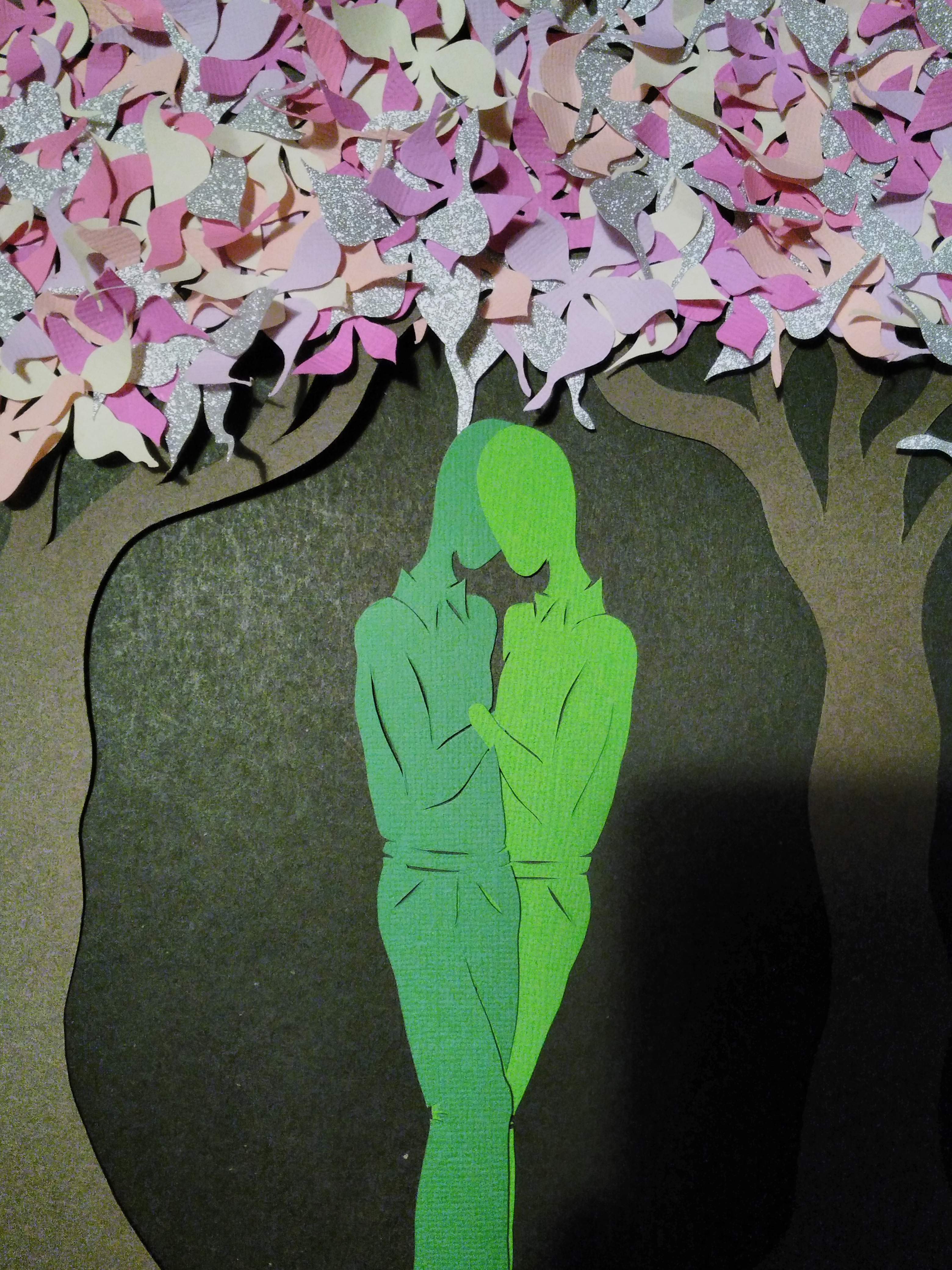
I’ve spent a lot of time today trying to finish some artwork for my documentary. I’ve been trying to us a mix of different textures when choosing paper and I think the end result looks nice at the moment. The process is very time consuming, and I think I’m going to need to factor in more time per animated sequence. 

I’ve been reading about the slow movement recently and see parallels in my chosen materials and methods at the moment. The time needed to complete the pieces I’m working on at the moment means that the results emerge slowly, and I have to have a bit of patience with the process. Rushing this kind of work may lead to quicker results, but the are frequently less successful than the ones I develop slowly, with plenty of thinking time built into the process.

Experiments in paper cut walk cycles

I’ve been putting a lot more thought into my documentary film recently. I’m really interested not just in telling a story but in using the film to look at how you can choose to tell stories about trauma and mental health. I’m also interested in working out how you tell stories about people in a way that doesn’t reduce them being ‘that guy that the thing happened to. I’m not sure I’m there on that yet.

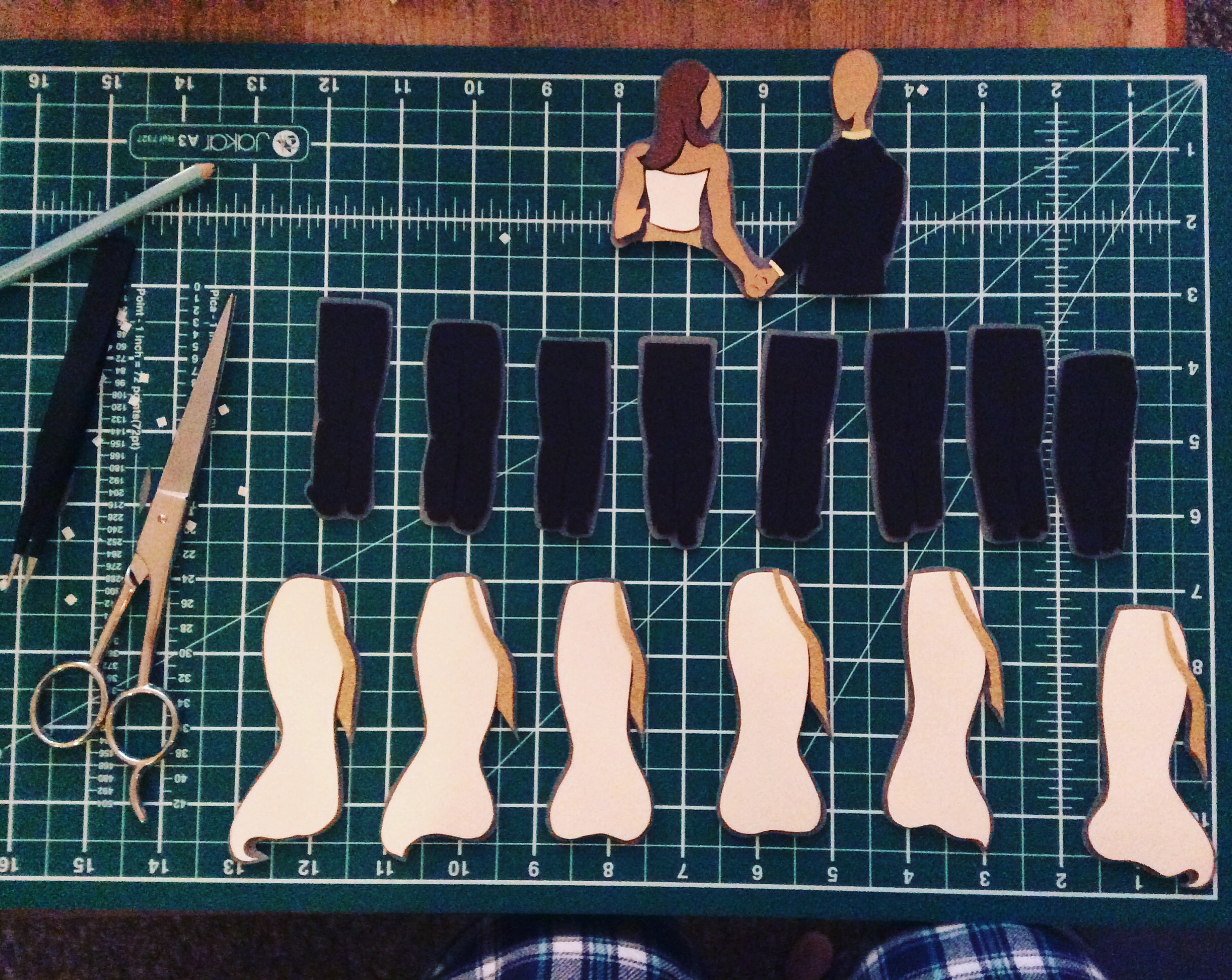
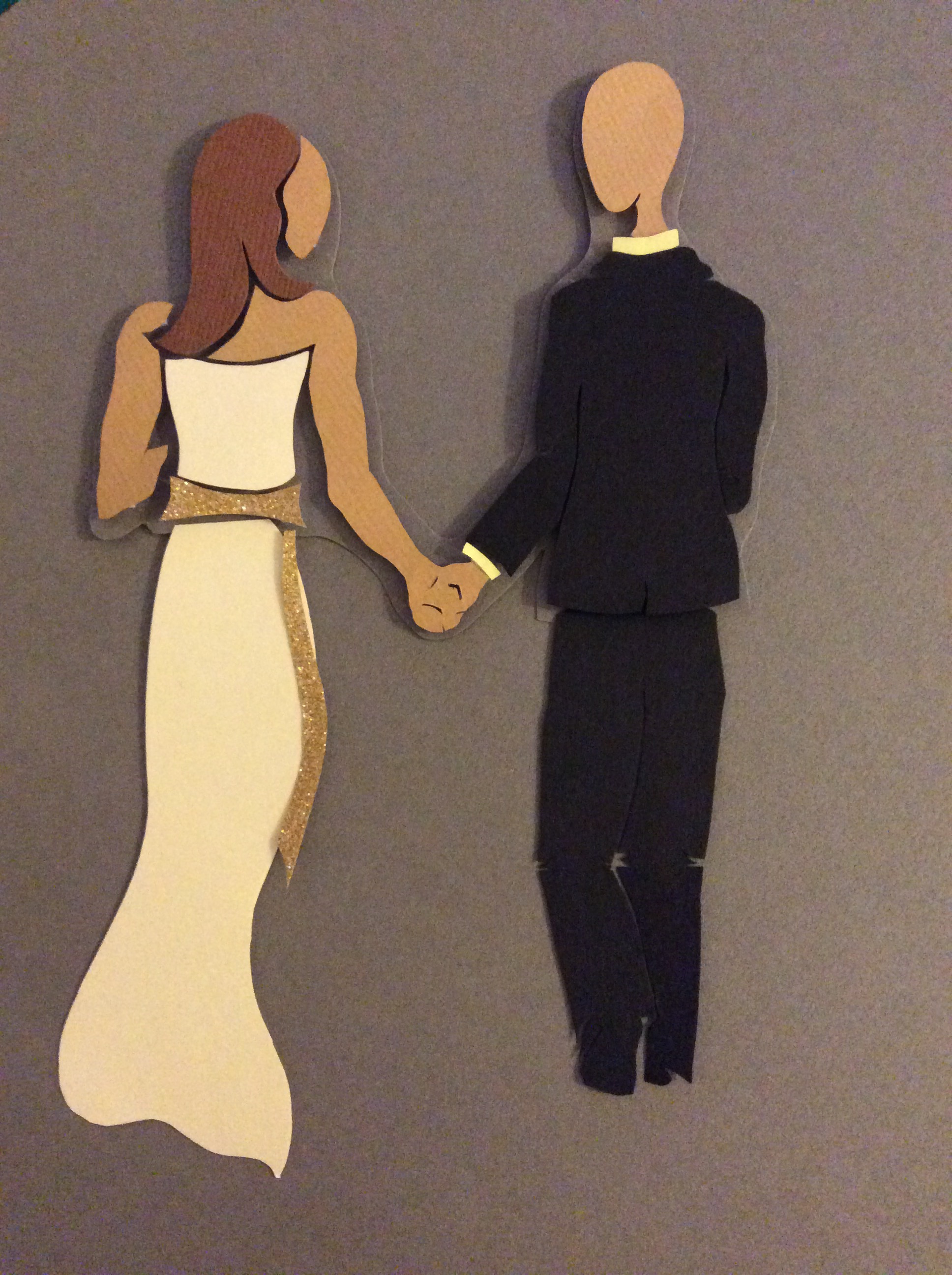
At the moment the majority of the actual film footage I have is of interviews. Personally I really like the style of doc where the film maker lets a person tell their story like this. However it’s visually not that interesting to look at. One of the aesthetic decisions I have made is to try to animate some sections of the interview footage, and to animate where I only have audio material. Here’s a photo of an experiment with papercut walk cycles. I’m going to photograph these, and then feed the images into adobe animate to create a couple walking. I’ll let you know how I get on with that. 

Animation, especially using a papercut style imagary that I really like to work with, is a really time hungry process. As I’m squeezing in an hour here and there around a full time job it’s taking me weeks to produce a few seconds worth of footage. It’s slow going but I’m pretty happy with this. I like using sections of footage that visually suggest the story is a construction – as much as the footage is of someone telling their own story in their own words, it’s still it’s my take on it. There could be other ways of telling the same events.

Works in progress


I’ve hit the ‘too many things, not enough time’ issue again this week so haven’t got a huge amount of thoughtful things to write about. We had a lunch out today and there basically wants anything vegan, or vegetarian on the menu that wasn’t full of gluten or cheese heavy. We ended up eating meat. And we didn’t really really enjoy it. This time last year we were total carnivores so that’s quite a change. I think when Veganury ends we’ll be staying mostly vegan, which is a decision I feel pretty happy with. So that news I guess.

I’ve been picking up some of my bigger projects and trying to push them a bit more. I’ve been working on some images for a documentary film I have been working on for a while. Some sections of the doc will take the form of animated sequences set to audio narration. I’ve been working with my papercut work in these animations. It sucks up time as each thing has to be drawn and cut multiple times, but I like effect and I think in the long (very long!) run it will be worth it.

Poor boyfriend: a practice

poor-boyfriend-1

Copyright Rose Thompson

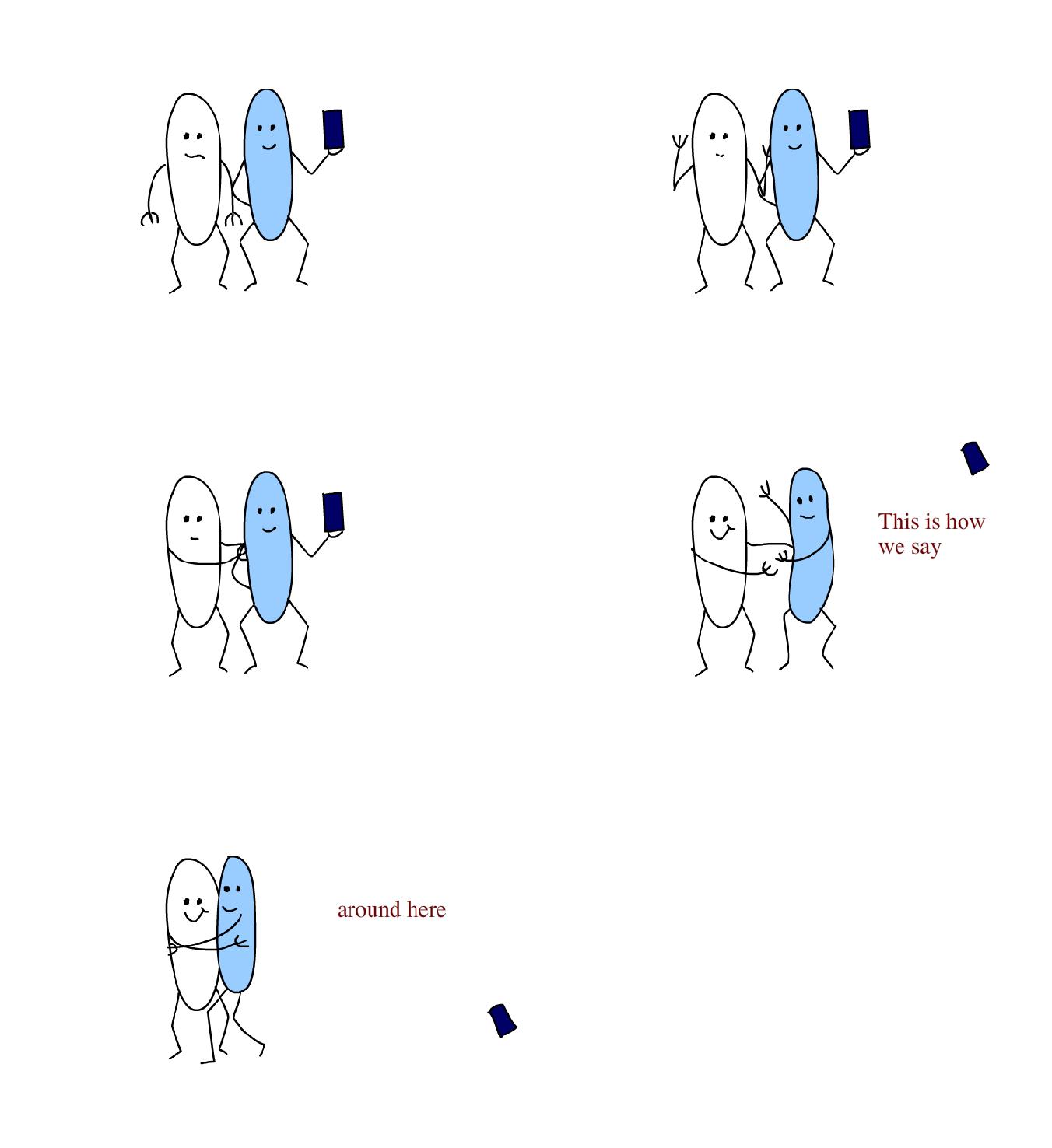
So here’s a little gif based on the poor boyfriend concept. Made using Adobe Animate CC 2017.

I’ve been using a Wacom tablet made by Bamboo. It’s an old device (I think the newest version is this one here), I bought it a while ago but only just started using it properly recently so I’m still getting used to the whole drawing while looking at the screen thing so some of these drawings are a bit ropey.