Changing times mean changing priorities: We’ve no idea what’s coming…

My son, who is only just three, got hold of my phone the other evening and took this photograph of me while I was trying to settle him for bed. I was not winning, as you can see. I’m pretty tired at the moment and not exactly light on my feet any more, but we are near the end, or the beginning, depending on which way you view it.

It won’t be long now before I’m in the hospital having my twins. I’m looking forward to having a body that can move around more easily, and that doesn’t get out of breath just walking up the stairs. But as in my first pregnancy, I’m also feeling proud of what it was able to do, which was grow two little humans to the point where they are ready to emerge into the world.

In both pregnancies I had delusions about how much writing I would be able to do in the last few weeks, when I was off work but not yet caring for babies. I thought I would be able to write lots of posts and lots of fiction. But instead, both times I have ended up sitting in bed watching crime dramas and batch cooking meals for the freezer.

But I’m not sorry, it important to recognise when you need to rest in preparation for challenges to come. I’m hoping to pop out a bit more writing before I pop out these babies, but I’ve decided not to hold myself to it, or to give my self a hard time if I don’t manage another word.

During my last maternity leave I was trying to write and make films and make art. This time, knowing I’m going to have so little time to myself I’m going to prioritise writing in those moments. It feels sad to be setting down the other media for a while, but I’m confident I will come back to them sooner or later.

I’m also going to try prioritising one writing project. I’ve been working on a fantasy novella for a while and I think it has potential. I’m about 45,000 words into a first draft at the moment, but it all needs development.

It started out as a little side project to another big fantasy project I was working on, as a way of practicing writing scenes and chapters that had a bit of momentum. But it’s a nice self contained story and would probably be the easiest thing I have ‘in progress’ to develop for sending to agents or for trying the self publishing route, so I’d actually like to get this one finished.

I’m still going to be putting out posts here on the blog and over at Medium, but over the next few months my output won’t be predictable or consistent. I have no idea what parenting twins is going to be like, or how much time I may end up having to do writing in at all, so it feels like the best compromise I can make with myself right now. I’m looking forwards to hearing from you all, and hopefully will see you on the other side.

Thank you for reading. I also write, make art and films. You can read my short fantasy stories here on Simily. If you like these prompts and want to get a copy of a free short book of them I wrote, and to hear more about my writing projects please join my mailing list here. You can see my films at my YouTube channel here. You can see things with my designs on at my shop here. Could even treat yourself if you wanted to. Just saying. If buying art is not your thing, but you would like to support what you see you could buy me a KoFi, and I also have a Patreon Page.

What taking 7 years to make a film taught me about creativity

Making a film on my own

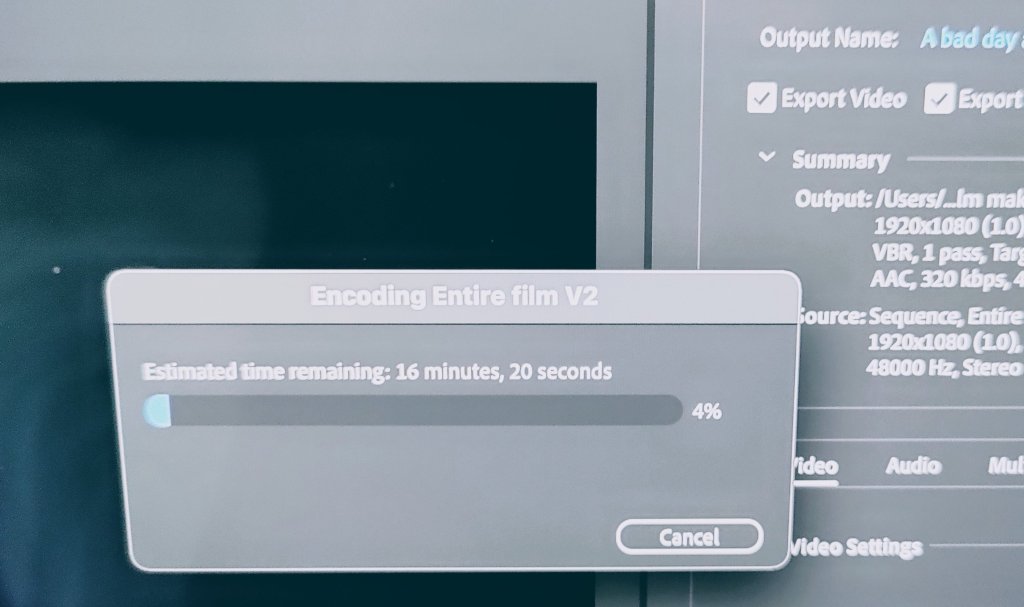
Earlier this year I finally pressed the ‘export’ button on a documentary film I had been making for over 7 years. I ended up working on the project on my own, in my spare time around a full time job, and later 2 house moves and a new baby.

It started out as a project that I did as part of a documentary film making course, which was a six month long part time course. I was meant to produce something that was fifteen minutes long and based only on filmed footage, but what I ended up producing, 7 years later stretches to just over an hour and has numerous animated sequences, which I also produced myself.

The finished film is very much a DIY affair, and is entirely self funded (although after paying for training and buying new equipment I estimate my spending on it to come in under £10,000).

It is the story of a man who was a journalist in Iraq at the beginning of the war in 2003, and who lost part of his leg to a landmine. My aim in the film was to tell the story of this event and his recovery from it.

I’ve entered it into a few festivals but have been knocked back from the bigger ones where I was probably competing against professional outfits. I’m still wiating to hear from some smaller ones, but I don’t really mind this, as entering the film into festivals weas more of a mark of completing the project for me than anything else. For those who know me actually finishing projects isn’t my strong point.

I’m pleased enough with the look, but having made it once there are things I would do differently now. There are definitely a lot of things I learned both about film making and my own creative process along the way.

Technical skills matter

One of the big frustrations I had with that original course is that the tutor spent far more time on ‘ideas development’ than she did on technical skills training. I think that ideas development is really important, and allowing space for that activity is definitely key to a successful project.

However, when I came to try to put some of my ideas into practice I found that I didn’t have the technical skills to do some of the things I wanted to do. Some of those things were quite basic editing techniques, and I needed to go off and pay for more training to really be able to start putting my ideas into practice

Equipment matters

Another problem I had with that orginal course was that the equipment they supplied was very big, clumbersome, and almost impossible to manage on my own. Most of the cameras were really designed for use on sets or bigger productions, not for the DIY documentarian.

I think they intended for groups of students to team up while making their films, but this didn’t work so well on a part time course as we all had different schedules and commitments. The impact this had on me was to make me feel that documentary film making would be inaccessible to me, and to lose courage. But over time I learned this was not the case.

Later I invested in a small digital DSLR camera that records really nice interview footage, a pair of radio mics and some other small bits and pieces. All of this equipement fits in a bag that I can take on the bus with me if I need to.

There are draw backs, in that the DSLR doesn’t like to record footage while it is moving (although it does a nice job with capturing things if it is locked off on a tripod), so I’ll have to supplement my kit at some point with a go pro or a camcorder.

But the lesson here was that with a bit of research I was able to find some kit that worked for me.

Being ‘slow’ is baked into my process

I was reading an article by Dad on the Spectrum the other day on Medium about how people who are neurodiverse take more time to do things. I left a comment about how I used to think I was ‘slow’, but now I know that I just think differently. I think in the comment this ‘slow’ came across as a negative thing, and it probably was at some point in the past.

Now I see that my process of circling through projects and giving each one a rest to breathe for periods of time is probably just part of my process. It certainly slows down my progress, but I think the end results are better so I’m learning to embrace ‘slow’.

I like to make things hard for myself

One of the decisions I made early on was to animate a number of sections in the film. I learned that using film footage is a lot quicker and easier, although maybe less satisfying.

I don’t regret choosing this path, but it was time consuming, labour intensive, and slowed down the whole process even more as I needed to do more training, and learn how to use a different set of software. Still I am glad that I did this as it enriched the experience of making my film.

If after all of that you would like to view the finished film you can see it here.

Thank you for reading. I also write, make art and films. You can read my short fantasy stories here on Simily. If you are interested in the process of creativity and want to get a copy of my free short book of creative prompts, and to hear more about my writing projects please join my mailing list here. You can see my films at my YouTube channel here. You can see things with my designs on at my shop here. Could even treat yourself if you wanted to. Just saying. If buying art is not your thing, but you would like to support what you see I also have a Patreon page here.

One-Time
Monthly
Yearly

Like my work but none of the above options appeal? You could consider a one off donation instead. I would really appreciate it.

Make a monthly donation

Make a yearly donation

Choose an amount

£2.00
£5.00
£10.00
£2.00
£5.00
£10.00
£5.00
£10.00
£15.00

Or enter a custom amount

£

Your contribution is appreciated.

Your contribution is appreciated.

Your contribution is appreciated.

DonateDonate monthlyDonate yearly

Creative Prompt: When shall we three meet again?

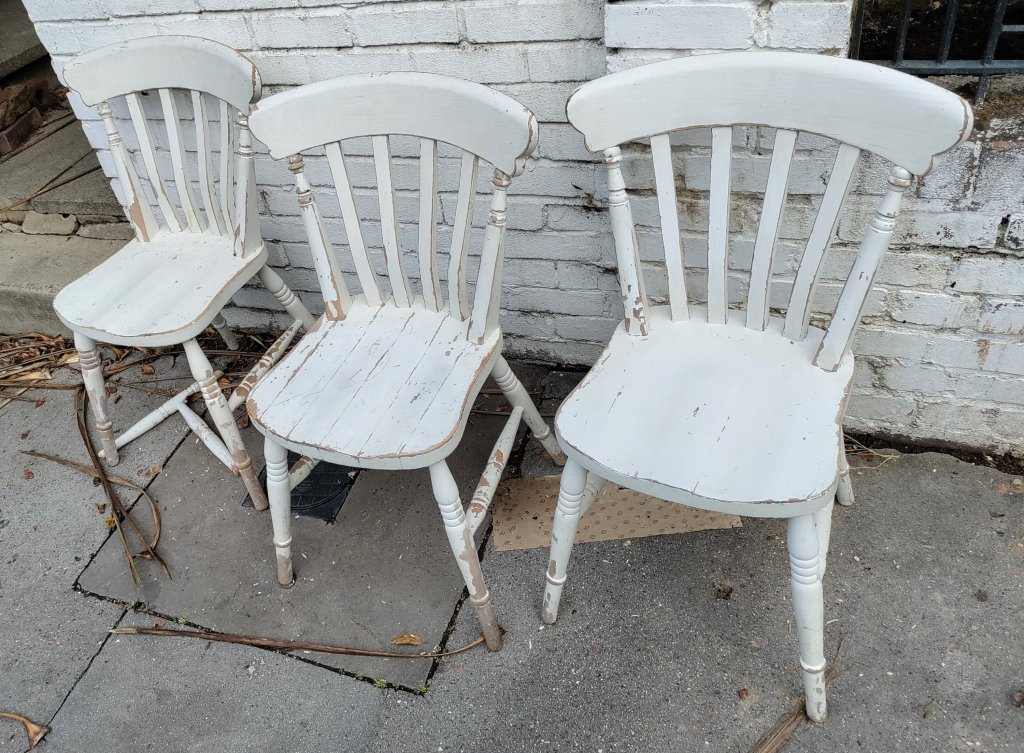
When I saw these three chairs sitting outside a house in the area where I live, they made me think of the line from Shakespeare’s Macbeth, “when shall we three meet again?” Three witches appear in the first act to deliver a prophesy to Macbeth, telling him that he will be the King of Scotland. This event is crucial in sending him off on his tragic way (for a full summary of the plot this website does a good job).

Mother, Maiden, Crone

The archetype of three women, often witches, with supernatural abilities (sometimes referred to as the Triple Goddess) has appeared in mythology throughout history, and across many different cultures. While they may mean slightly different things in different cultures, it is thought that these figures were meant to symbolically represent three different phases of life for women:

  • Youth and innocence in the Maiden
  • Fertility and care in the Mother
  • Wisdom and experience in the Crone

Often the appearance of the women in mythology was linked to aspects of nature such as the turning of the seasons or the phases of the moon(for more information on this wikipedia has a longer and more detailed entry here).

I’ve personally been a fan of books in which the figures of three witches take a more central role than they did in Macbeth, like the subversion of those stereotypes in Terry Pratchett’s Wyrd Sisters (this is an affiliate link – if you buy this book using this link I’ll be sent a few pence as a referral fee), or the warmth of Mark Stay’s Witches of Woodville Series (full disclosure, I know Mark a little bit, but I think I would have found these books warm and lovely if I didn’t, also an affiliate link).

Back to my three chairs on the street

I actually walked past the chairs a couple of times before I had a quiet moment in which to take a photograph, and was lucky that they remained in place for so long. Perhaps they were waiting for me as two of them disappeared the next day. There is a sense of mystery around the arrangment of the chairs, as if only moments ago three people sat to discuss an urgent matter, before leaving to follow different paths.

What do you think they may have been discussing?

Where did those paths lead them?

I’m not a huge fan of creative exercises, so it’s not my habit to tell people what to do with these prompts. There are lots of options – a scene, some flash fiction, a short story, an idea for a short film or a physical piece of art. If you do have a go with this one and would like to drop the result in the comments please do so. I would be very interested to see what people make of these so please do link to blog posts or comment below.

If you like the photos featured in these creative prompt posts you may be interested in my latest collection of prints and other things on Redbubble which feature a small selection of my best shots.

Thank you for reading. I also write, make art and films. You can read my short fantasy stories here on Simily. If you like these prompts and want to get a copy of a free short book of them I wrote, and to hear more about my writing projects please join my mailing list here. You can see my films at my YouTube channel here. You can see things with my designs on at my shop here. Could even treat yourself if you wanted to. Just saying. If buying art is not your thing, but you would like to support what you see I also have a Patreon Page.

One-Time
Monthly
Yearly

Like my work but none of the above options appeal? You could consider a one off donation instead. I would really appreciate it.

Make a monthly donation

Make a yearly donation

Choose an amount

£2.00
£5.00
£10.00
£2.00
£5.00
£10.00
£5.00
£10.00
£15.00

Or enter a custom amount

£

Your contribution is appreciated.

Your contribution is appreciated.

Your contribution is appreciated.

DonateDonate monthlyDonate yearly
Creative Prompt: Time Waits For No Mouse

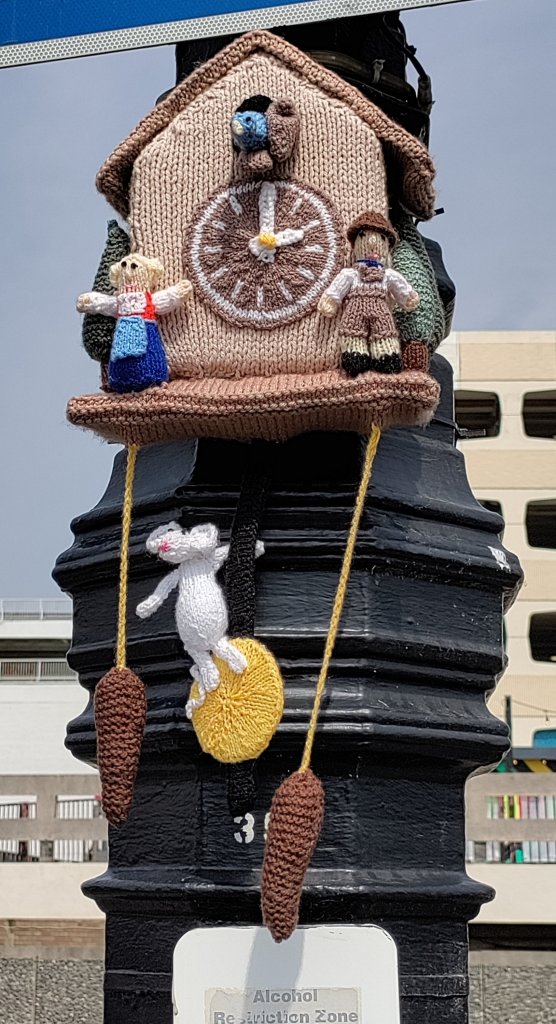
A few weeks ago my little family and I took a holiday by the seaside in the town of Worthing, East Sussex. While we were there I noticed quite a few little pieces of knitted art like this clock that we saw fixed to a lamp post. Most of them were fixed to various spots along the promenade at the sea front, which is a popular public space even when the air is cold, windy and flecked with rain.

I later found out that it was part of an art project called Time and Seasons by the local knitting group Make and Munch (for a nice article about the project read here). I really loved the quiet humour in these pieces, like the little mouse hanging on the pendulum.

It is inspiring to see people use slightly subversive artistic tactics in public spaces to prompt people to stop for a moment and maybe reflect on something important for a moment. Here the juxtaposition of the soft, ‘indoorsy’ feel of the knitting against the raw elements of the sea front caused me to stop and take a photograph, and to wonder what the piece was about.

Public spaces can often feel like they are corporate spaces, simply maintained and organised to sell people things that they probably don’t need. Art in these spaces can do the opposite, especially pieces that are as enigmatic as this one, they can invite people to spend time simply collectively looking and thinking and feeling. Sometimes they can induce a feeling of beloning, that these spaces may be ‘for us’ after all.

If you were able to reclaim a local public space with art, where would that be? What would the project look like?

I’m not a huge fan of creative exercises, so it’s not my habit to tell people what to do with these prompts. There are lots of options – a scene, some flash fiction, a short story, an idea for a short film or a physical piece of art. If you do have a go with this one and would like to drop the result in the comments please do so. I would be very interested to see what people make of these so please do link to blog posts or comment below.

If you like the photos featured in these creative prompt posts you may be interested in my latest collection of prints and other things on Redbubble which feature a small selection of my best shots.

Thank you for reading. I also write, make art and films. You can read my short fantasy stories here on Simily. If you like these prompts and want to get a copy of a free short book of them I wrote, and to hear more about my writing projects please join my mailing list here. You can see my films at my YouTube channel here. You can see things with my designs on at my shop here. Could even treat yourself if you wanted to. Just saying. If buying art is not your thing, but you would like to support what you see I also have a Patreon Page here.

One-Time
Monthly
Yearly

Like my work but none of the above options appeal? You could consider a one off donation instead. I would really appreciate it.

Make a monthly donation

Make a yearly donation

Choose an amount

£2.00
£5.00
£10.00
£2.00
£5.00
£10.00
£5.00
£10.00
£15.00

Or enter a custom amount

£

Your contribution is appreciated.

Your contribution is appreciated.

Your contribution is appreciated.

DonateDonate monthlyDonate yearly
Creative Prompt: OK Computer!

I’m always intrigued when I see pieces of electronic devices laying around in places that you wouldn’t necessarily expect them. I saw this thing that I’m assuming is a computer chip of somekind (I’m probably wrong here) in a playground when I was out with my son. There were lots of kids running around and using the swings and slides and it seemed out of place, laying there in the dirt.

I’m quite attracted to the green colour and the pattern of lines on the front of the chip. It makes me think that it could encode something interesting, and provokes story ideas for me about a computer savvy child finding a computer chip and getting herself into a strange situation through her own curiosity.

What kind of information could be on this chip?

Where could it lead?

I’m not a huge fan of creative exercises, so it’s not my habit to tell people what to do with these prompts. There are lots of options – a scene, some flash fiction, a short story, an idea for a short film or a physical piece of art. If you do have a go with this one and would like to drop the result in the comments please do so. I would be very interested to see what people make of these so please do link to blog posts or comment below.

If you like the photos featured in these creative prompt posts you may be interested in my latest collection of prints and other things on Redbubble which feature a small selection of my best shots.

Thank you for reading. I also write, make art and films. You can read my short fantasy stories here on Simily. If you like these prompts and want to get a copy of a free short book of them I wrote, and to hear more about my writing projects please join my mailing list here. You can see my films at my YouTube channel here. You can see things with my designs on at my shop here. Could even treat yourself if you wanted to. Just saying. If buying art is not your thing, but you would like to support what you see I also have a Patreon Page here.

One-Time
Monthly
Yearly

Like my work but none of the above options appeal? You could consider a one off donation instead. I would really appreciate it.

Make a monthly donation

Make a yearly donation

Choose an amount

£2.00
£5.00
£10.00
£2.00
£5.00
£10.00
£5.00
£10.00
£15.00

Or enter a custom amount

£

Your contribution is appreciated.

Your contribution is appreciated.

Your contribution is appreciated.

DonateDonate monthlyDonate yearly
WIP Sneak Peak: Location Sketch

I’ve been thinking a bit more carefully in the last few weeks about some of the settings and locations in my fantasy novel series (working title Feeding Jasmine Valentine). I’m in the middle of a new re-write at the moment and have a chance to go back and really think about what I may need to build on the first draft, and how some of the key locations can be more useful in the narrative if I do some more substantial world building around them.

I’m quite a visual person (which may be a Dyslexic thing) and having pictures and diagrams tends to help me, so I spent an hour one afternoon last week on some ‘first take’ sketches of a key location in the first book. There are bound to be problems with my initial ideas, and I’m going to work on these a bit more, but I thought it may be nice to share my first messy sketch here, if only to show I’m still working on it!

I’d be really interested to hear from other writers who use sketches in their world building. How do you do that? Do you think it’s really useful or a form of procrastination?

Thank you for reading. I also write, make art and films. You can read my short fantasy stories here on Simily. If you are interested in the process of creativity and want to get a copy of my free short book of creative prompts, and to hear more about my writing projects please join my mailing list here. You can see my films at my YouTube channel here. You can see things with my designs on at my shop here. Could even treat yourself if you wanted to. Just saying. If buying art is not your thing, but you would like to support what you see I also have a Patreon page here.

One-Time
Monthly
Yearly

Like my work but none of the above options appeal? You could consider a one off donation instead. I would really appreciate it.

Make a monthly donation

Make a yearly donation

Choose an amount

£2.00
£5.00
£10.00
£2.00
£5.00
£10.00
£5.00
£10.00
£15.00

Or enter a custom amount

£

Your contribution is appreciated.

Your contribution is appreciated.

Your contribution is appreciated.

DonateDonate monthlyDonate yearly

Ideas from science to boost your art: The restorative impact of nature

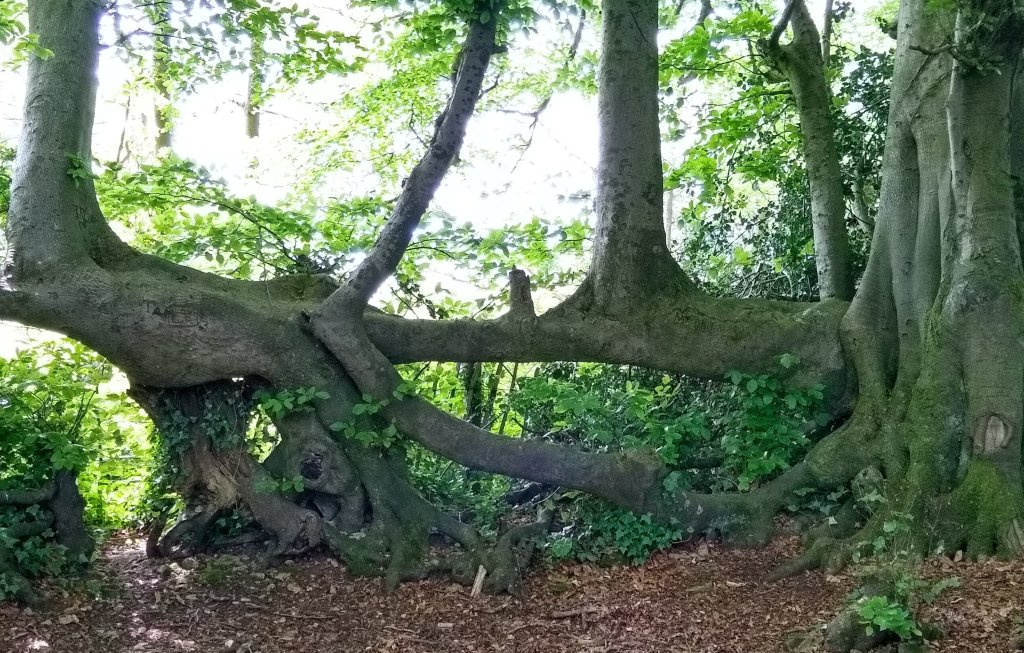
Before I started writing this blog post I took a walk in a nature park that is close to my home. I had spent the morning trying to upload my film to a website in order to submit it to some festivals (more news on that to come), and was in need of a creative reset before I started working on a different project. I frequently find that a walk in a wild place will help me think through what I want to say or do next on any number of my creative works in progress, and it has significant positive impact on my mental and physical health too. I’m not the only one who finds this, and the positive impact of being in green or blue spaces on humans has been established for some time.

This is why I wanted to discuss some of the ideas of Rachel and Stephen Kaplan in this next ‘ideas from science to boost your art’ post. I came across their book, The experience of nature: a Psychological perspective while working up a proposal for a project at work. It’s an old book, published in 1989 and doesn’t appear to be in print any more, but I was able to access it for free here.

The book outlines a theoretical perspective on how natural environments are beneficial to us, and then brings together a lot of evidence to support different parts of the theory from psychological studies that the authors and their students conducted around that time. I really liked how they described an inclusive understanding of natural environments on page 2 as “places near and far, common and unusual, managed and unkempt, big, small and in-between, where plants grow by design, or even despite it.”

I’m not actually going to write about the evidence here. This is partly because the evidence is likely to have been built upon in the thirty years since it’s publication, and should I try to update that here this would turn into a very long blog post. It’s also partly because I think the basic ideas are something that may be helpful and thought provoking to creatives and non creatives alike. Given the book is 368 pages it’s unlikely that I’ll fit everything into a thousand words or so of a blog post, and I have also simplified things because of this. If you like what you see, try giving it a read.

Humans and information

They begin by describing how human beings are highly dependent on information to function, which they hoover up from their environments through all the senses available to them. The brain is in a constant state of sorting through which information is important and requires some sort of action, and which is not. In order to do this hoovering and sorting the brain can engage in two different types of attentional processes:

  1. ‘Involuntary attention’ – the kind of focus you may have when engaging with something you already find interesting. This kind of attention is relatively low effort, and enjoyable
  2. ‘Directed attention’ – the kind of attention you have to work at. If we think about this as writers, it’s the kind of attention you may need to sustain your concentration through a difficult scene or a series of picky revisions or edits. Sustaining this kind of attention for extended periods of time can result in mental fatigue, even if this has been in the pursuit of a project that is enjoyable.

They then make the argument, which feels intuitively right to me, that in modern society we have constructed urban environments and social structures that constantly provide us with lots of interesting and distracting information, and thus there is lots of ‘sorting’ to do between the information that is just interesting, and the information that requires action. As a result we frequently engage in directed attention, which can result in mental fatigue.

Mental fatigue

For most writers and creatives, especially ones like myself who are trying to fit creative stuff in around other bits of life, I think that mental fatigue may be a familiar feeling. It is the state where someone may feel ‘worn out’ without necessarily having engaged in any physical activity. They even note that people who experience this may complain that they have not engaged in enough activity.

The consequences of mental fatigue may be familiar too. People who are mentally fatigued are more likely to commit human errors and to be aggressive, less tolerant, and less sensitive to socially important cues. So here is the explanation for that gaping plot hole that you didn’t notice first time round in that bit of the book you wrote while really tired and highly caffeinated.

Restorative environments

The bulk of the book is dedicated to building a case around why natural environments may be ‘restorative environments’, by which they mean environments that facilitate rest and recovery from mental fatigue. They cite four different characteristics that environments they consider to be ‘restorative’ have:

  1. The sense of ‘being away’ both from one’s every day concerns and responsibilities, and from noise and cluttered urban spaces
  2. The sense of being in ‘a whole other world’ in which things may look and feel quite different
  3. They are inherently fascinating, and easily engage those processes of ‘involuntary attention’ we met earlier
  4. They are compatible with the things that people like to do

The descriptions of these four types of characteristics are quite long and detailed. I’m not going to paraphrase them here as this blog will never end, and I feel like these characteristics will intuitively make sense to a lot of people. If you do want to read about the detail, the relevant sections start from page 184.

I think many of us can see how being in a natural space may fit the bill for all of the above. Being out in a green or blue space means we are away from our desks, our work places, perhaps even our caring responsibilities, and things feel quite different there. Allowing ourselves the time to pay attention to the plants and insect and other animals can feel like being in a whole other world, and is, for many people, inherently fascinating. Being in calm green places allows many of us to do things that we enjoy, like hiking, cycling or sitting near bodies of water.

Recovery from mental fatigue

The final aspect of this theory that I think is really helpful for creatives is their discussion of how being in a natural environment can help us recover from mental fatigue. They suggest this can happen at four levels:

  1. Clearing the head and allowing your mind to pack away the ‘cognitive leftovers’ from a recent task or project
  2. Recovering our abilities to engage in the processes of directed attention, i.e. our ability to concentrate
  3. The ‘soft fascination’ that is induced by exploring the plants and creatures of a place allows for a kind of cognitive quiet which may give space to think about things that are ignored, or not felt to be important on a day to day level
  4. The space for deeper reflections on one’s life , priorities, actions and goals

For me I think the most important take away from these ideas is that as a creative, the key to being productive and having good ideas is not to work on this or that project in every spare moment as western culture may sometimes suggest. Rather, those moments when we step away from our desks and out, into the garden, or away to the park are really important for our brains to be able to function when we do next sit down to work on something. Personally I found this insight really helpful as I often feel a bit guilty when I take an hour out of my ‘art day’ to walk in the park, and perhapse I don’t need to feel like that at all.

I hope you have found this blog interesting or thought provoking. If you have thoughts or comments, I would love to hear from you.

Thank you for reading. I also write, make art and films. You can read my short fantasy stories here on Simily. If you are interested in the process of creativity and want to get a copy of my free short book of creative prompts, and to hear more about my writing projects please join my mailing list here. You can see my films at my YouTube channel here. You can see things with my designs on at my shop here. Could even treat yourself if you wanted to. Just saying. If buying art is not your thing, but you would like to support what you see I also have a Patreon page here.

One-Time
Monthly
Yearly

Like my work but none of the above options appeal? You could consider a one off donation instead. I would really appreciate it.

Make a monthly donation

Make a yearly donation

Choose an amount

£2.00
£5.00
£10.00
£2.00
£5.00
£10.00
£5.00
£10.00
£15.00

Or enter a custom amount

£

Your contribution is appreciated.

Your contribution is appreciated.

Your contribution is appreciated.

DonateDonate monthlyDonate yearly

New fiction posted on Simily

I’ve recently been doing a bit of investigation around the different platforms that are popping up for sharing written work. The reason for this is that I’ve had a short story sitting around on my computer that I’m pretty happy with, but I couldn’t find a place to put it. It’s been bounced from a couple of magazines with people saying it’s not there thing, and I feel pretty fine about that. Some of the other magazines that I was interesting in sending it too are still closed to submissions for now following the pandemic, and I’m I feel like I want to get it out there and move on to the next thing. It’s also bit long to post as a blog post, and I feel like my website may not be the best place to get it seen.

So, I’m trying out the new fiction sharing platform Simily, where I have posted my short story ‘Old Grey Beard’. The platform is currently trying to build up a membership and readershi base, and aim to connect readers with good stories and writers with a paying audience. At the moment if you read my story there, whether you decide to sign up to the platform or not, I’ll get paid $0.02 per view (reading for more than 5 second), so if you are interested in reading some of my work I’d appreciate it if you would head on over there and have a read.

I think I’m going to try it out for the next year or so and see how I get on. I don’t write that many shorts and I kind of struggle with them a bit so it may be a good way of getting a bit of feedback from people who don’t know and like me, which would be a great help too. So, I hope to see you over there, any and all comments greatly recieved!

Thank you for reading. I also write, make art and films. If you are interested in the process of creativity and want to get a copy of my free short book of creative prompts, and to hear more about my writing projects please join my mailing list here. You can see my films at my YouTube channel here. You can see things with my designs on at my shop here. Could even treat yourself if you wanted to. Just saying. If buying art is not your thing, but you would like to support what you see I also have a Patreon page here

One-Time
Monthly
Yearly

Like my work but none of the above options appeal? You could consider a one off donation instead. I would really appreciate it.

Make a monthly donation

Make a yearly donation

Choose an amount

£2.00
£5.00
£10.00
£2.00
£5.00
£10.00
£5.00
£10.00
£15.00

Or enter a custom amount

£

Your contribution is appreciated.

Your contribution is appreciated.

Your contribution is appreciated.

DonateDonate monthlyDonate yearly
Writing Prompts from Street Photograhy: A Fridge on the Street

I saw this fridge the other morning on a street near where I live. It was pretty gloomy when I took the photograph and I didn’t think that the light was that great so it was a bit of a hurried snap. We get a lot of fridges and things like that dumped in our area by fly tippers, and I don’t normally both to take photos because a big white box isn’t normally that interesting to me. This one was a bit different, because of the magnetic jigsaw puzzel that is still attached to the front door. The fridge was a new arrival that morning – it hadn’t been there the evening before.

The way that one of the puzzels looks almost complete, while the second one is a fractured smattering of pieces spread across the surface makes it looks as if up until very recently, this fridge was being used by a family. There is something about the dumping of this fridge that speaks to me of dislocation, or of a rapid change in circumstances.

What happened to result in someone needing to get rid of it in the middle of the night?

I’m not a huge fan of creative exercises, so it’s not my habit to tell people what to do with these prompts. There are lots of options – a scene, some flash fiction, a short story, an idea for a short film or a physical piece of art. If you do have a go with this one and would like to drop the result in the comments please do so. I would be very interested to see what people make of these so please do link to blog posts or comment below.

If you like the photos featured in these creative prompt posts you may be interested in my latest collection of prints and other things on Redbubble which feature a small selection of my best shots.

Thank you for reading. I also write, make art and films. You can read my short fantasy stories here on Simily. If you like these prompts and want to get a copy of a free short book of them I wrote, and to hear more about my writing projects please join my mailing list here. You can see my films at my YouTube channel here. You can see things with my designs on at my shop here. Could even treat yourself if you wanted to. Just saying. If buying art is not your thing, but you would like to support what you see you could buy me a KoFi, and I also have a Patreon Page.

Ideas from science to boost your art: The psychology of curiosity

This is the first post in a series of blogs I’m tentatively calling ‘Ideas from science to help your art’. I’ve been increasingly interested in the science of creativity and storytelling for a while as my own adventures in creativity have developed over time. When I completed a PhD in the psychology of storytelling back in 2009 I was very interested in related work, but I haven’t really had the opportunity to return to that area in my professional life since then as my research career took a number of turns away from it.

Since I completed my film a couple of weeks ago I’ve found I have a bit more head space now, and am planning to write a series of longer blog posts about ideas in science that are related to the creative process and to storytelling. I imagine these posts will be a bit intermittent to begin with, as each post will require more research than I currently indulge in, and it’ll take a bit of time to work out how to fit everything in. But I am looking forward to the challenge or re-engaging with this area.

I came across the first idea I wanted to pick up while listening to ‘The Science of Storytelling’ by Will Storr on Audible (affiliate links – if you use these links to make a purchase I’ll get a tiny commission). I’m a bit of the way through chapter one at the moment and am finding it interesting. He has covered quite a bit of ground that I’m partially familiar with from my own psychology studies, and I think his way of communicating the science is clear and engaging. He has spent some time explaining how none of us truly know what reality is, rather we all live in a virtual simulation constructed in the brain from the information we gain through our five senses. Story is effective in tapping into the process through which we do this to create imaginative simulations.

I was particularly interested in a section he has written about curiosity, in which he draws on the work of George Loewenstien. I’ve not been able to access the papers that Storr references (they don’t appear to be available as open access sources and are expensive to purchase) so what I say here is based on how Storr presents this work, rather than my direct reading of the original science.

In this section Storr explains that curiosity works through the brain’s reward system, so the same bits that respond to cake and wine, creating a desire for answers to questions. He then goes on to describe how good stories incorporate curiosity into their structures. A story poses questions, and then allows answers to unfold slowly over time. He quoted Loewenstien’s paper ‘The Psychology of Curiosity’ to list four ways in which it is possible to induce curiosity:

  1. The posing of questions or the presentation of puzzles
  2. Exposing someone to a sequence of events that have an anticipated, but unknown resolution
  3. Violating a person’s expectations of something, causing them to search for an explanation
  4. Knowing that someone else of possesses information that you don’t have

He then goes on to describe how this is also the basic structure of any good crime drama. The harnessing of natural human curiosity is essential to making this genre of stories, and many others, work.

I found this section of the book very helpful. I don’t think I am always that good at posing questions in my own fiction writing, which may be why I have struggled to progress with my new draft of Feeding Jasmine Valentine, my WIP. As a mechanism for hooking readers in, this use of curiosity is effective.

But I also think that understanding how curiosity works is helpful for the creative process, for writing or making art. An unanswered question can drive a writer or an artist as much as it can a reader. Many of my own scenes or mini projects start with “why is that like that?” Or “why did X do Y?” questions, and from there the process of writing is also a process of discovery.

Thank you for reading. I also write, make art and films. You can read my short fantasy stories here on Simily. If you are interested in the process of creativity and want to get a copy of my free short book of creative prompts, and to hear more about my writing projects please join my mailing list here. You can see my films at my YouTube channel here. You can see things with my designs on at my shop here. Could even treat yourself if you wanted to. Just saying. If buying art is not your thing, but you would like to support what you see I also have a Patreon page here

One-Time
Monthly
Yearly

Like my work but none of the above options appeal? You could consider a one off donation instead. I would really appreciate it.

Make a monthly donation

Make a yearly donation

Choose an amount

£2.00
£5.00
£10.00
£2.00
£5.00
£10.00
£5.00
£10.00
£15.00

Or enter a custom amount

£

Your contribution is appreciated.

Your contribution is appreciated.

Your contribution is appreciated.

DonateDonate monthlyDonate yearly